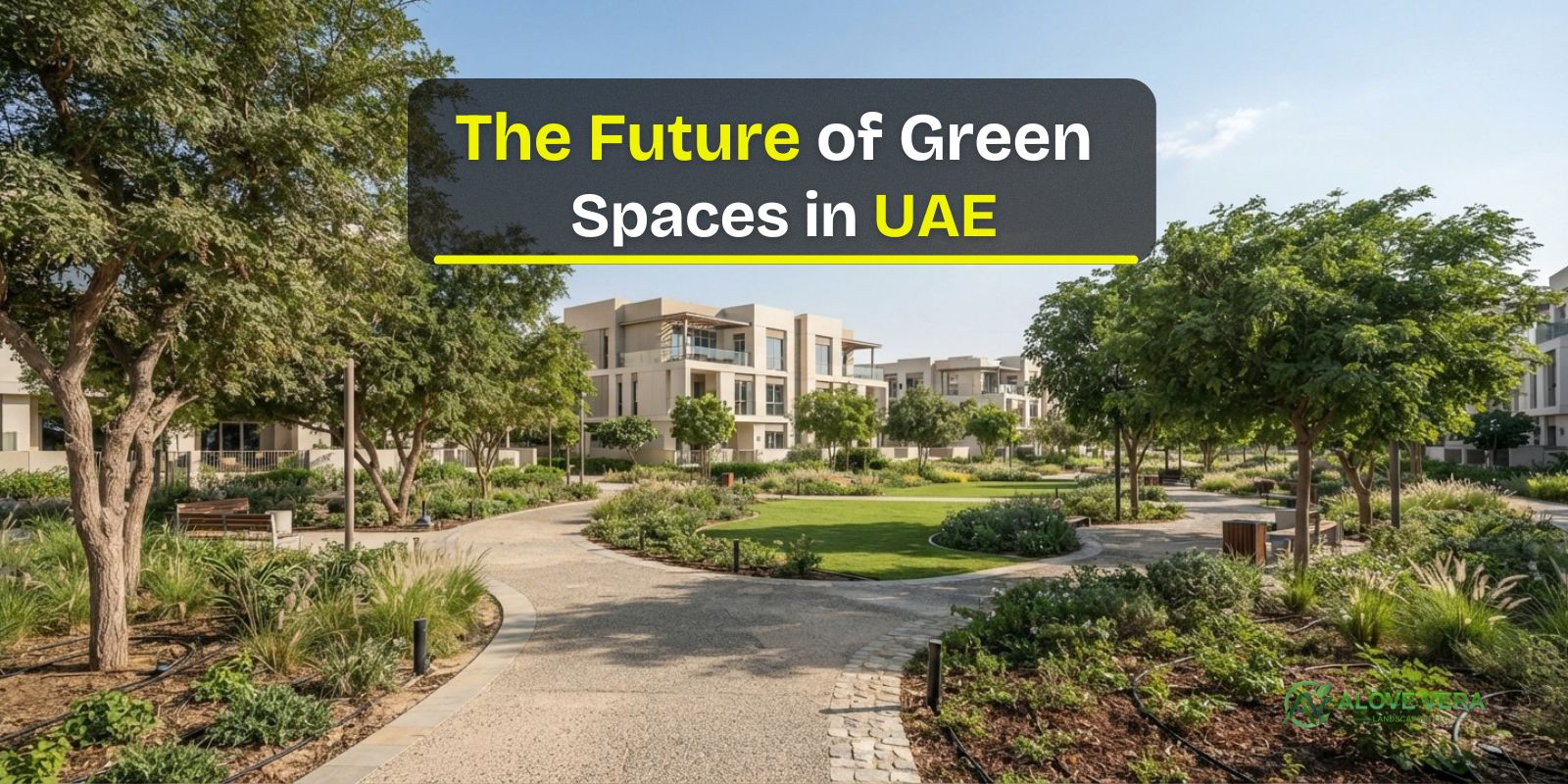
The Future of Green Spaces in UAE Cities and Communities
The future of green spaces in UAE is becoming a serious planning topic, not just a design preference. As cities like Dubai, Abu Dhabi and Sharjah grow denser, residents still expect shade, greenery and places to walk, sit and relax. At the same time, authorities must think about water use, climate, and public health.
If you own a villa, manage a commercial property, or are involved in a community project, understanding how UAE green spaces are evolving can help you make better landscape decisions today.
Why the Future of Green Spaces in UAE Matters
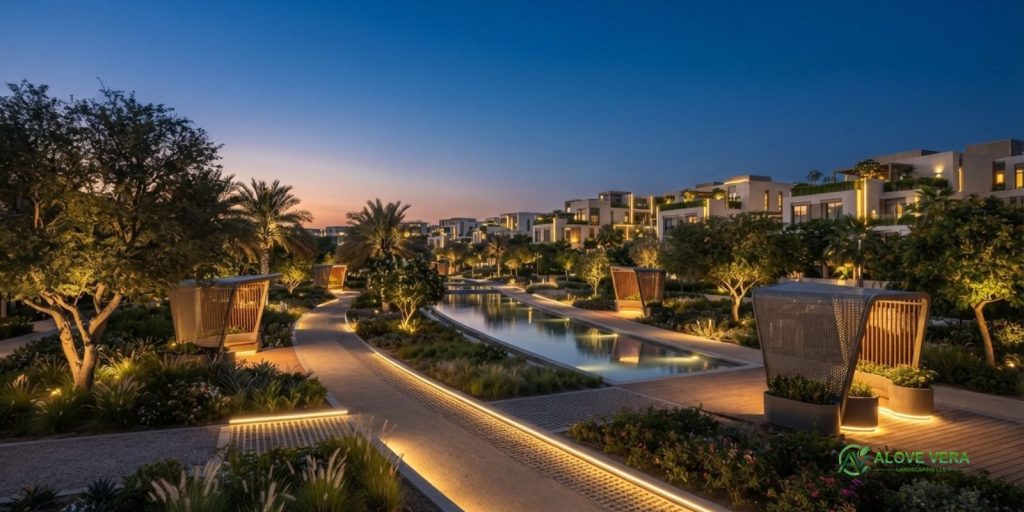
Urban life in the UAE is intense: high temperatures for much of the year, busy roads, tall buildings and large paved areas. Without thoughtful urban green spaces UAE, this can lead to:
- Hotter local microclimates
- Less comfortable outdoor time
- Higher cooling loads for buildings
- Fewer places for walking and informal social interaction
UAE development strategies commonly emphasise sustainability, liveability and the quality of urban environments (UAE Government Portal, https://u.ae). The future of UAE green spaces will play a direct role in achieving these goals.
For private owners and developers, this means green areas are no longer “nice extras”. They are a central part of property value, comfort and long-term viability.
From Decorative Lawns to Functional Urban Green
In many older projects, green spaces in UAE cities focused on lawns and decorative shrubs. These looked good in winter but often demanded heavy irrigation and constant replacement.
Looking ahead, the future of green spaces in UAE is moving toward more functional, climate-aware landscapes:
- Less reliance on large, purely ornamental lawns
- More emphasis on shade trees and robust groundcovers
- Plant mixes that handle heat, wind and local soils
- Layouts that encourage walking, sitting, playing and informal use
In practice, that could mean:
- A villa community replaces large open grass panels with shaded walking loops, native planting and small play lawns.
- An office complex uses shaded courtyards with trees and seating instead of one central grass patch.
This shift is at the heart of sustainable landscaping UAE work.
Native and Climate-Adapted Planting
The future of green spaces in UAE will depend heavily on plant choice. Native and well-adapted species are likely to become the backbone of many projects, both private and public.
Key reasons:
- They are better suited to heat and water conditions.
- They often need less long-term irrigation once established.
- They can provide more suitable habitats for local insects and birds when selected and planted appropriately.
Examples of how this affects green community design UAE:
- Using ghaf or sidr trees as primary shade trees instead of only imported species.
- Relying on desert grasses, succulents and shrubs along streets and medians.
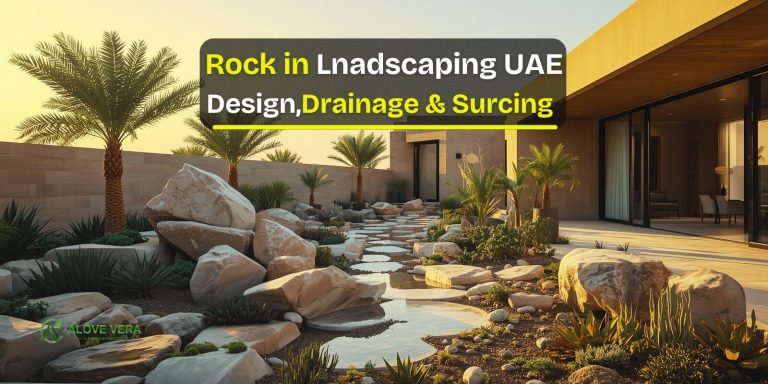
- Using more mulch and gravel around plants to protect soil moisture.
For villa owners and facility managers, moving in this direction now means your landscape will already align with the future of green spaces in UAE as regulations and expectations tighten.
Multi-Use Outdoor Spaces in Communities
In new neighbourhoods, we are already seeing urban green spaces UAE designed for multiple uses. This trend will likely strengthen.
Future-oriented designs tend to:
- Combine jogging or walking tracks with shaded seating pockets.
- Include small, flexible lawns that can host exercise, picnics, or play.
- Place exercise equipment, play areas and quiet zones along one continuous path.
Instead of one big central lawn, you get a network of smaller, shaded green “nodes” that people can use at different times of day.
This model helps:
- Spread activity across a community.
- Give more residents green space near their homes.
- Reduce the load on any single area, improving maintenance and durability.
It is a practical direction for the future of green spaces in UAE because it balances comfort, cost and land use.
Water Management and Smart Irrigation
No discussion of the Future of Green Spaces in UAE can ignore water. The country sits in an arid region, and desalinated water is energy-intensive. Government messaging and regulations strongly stress efficient use (UAE Government Portal, https://u.ae).
Some key directions already shaping sustainable landscaping UAE:
- Drip irrigation for most planting beds instead of wide-spray sprinklers.
- Zoning irrigation so that trees, shrubs, groundcovers and lawns are managed differently.
- Improve soil and add mulch to hold moisture longer.
- Use of treated wastewater in some larger public and commercial projects where available and permitted.
For villas and private properties:
- Reducing lawn areas and choosing water-efficient planting can help lower irrigation demand.
- Smart controllers that adjust watering by season and area help trim waste.
As water tariffs and guidelines evolve, landscapes that already apply these principles will adapt better to the future of green spaces in UAE.
Human Comfort: Shade, Wind and Microclimate
Green spaces in hot climates must do more than look good. They need to change how a place feels. The future of green spaces in UAE will likely put more focus on microclimate design:
- Shade from trees, pergolas and building overhangs to protect people and surfaces.
- Ventilation routes that allow breezes to move but block dust and hot winds.
- Material choice (lighter paving, cooler surfaces) to reduce heat build-up.
This is already visible in many modern outdoor living spaces attached to villas:
- Shaded seating integrated with trees and planters.
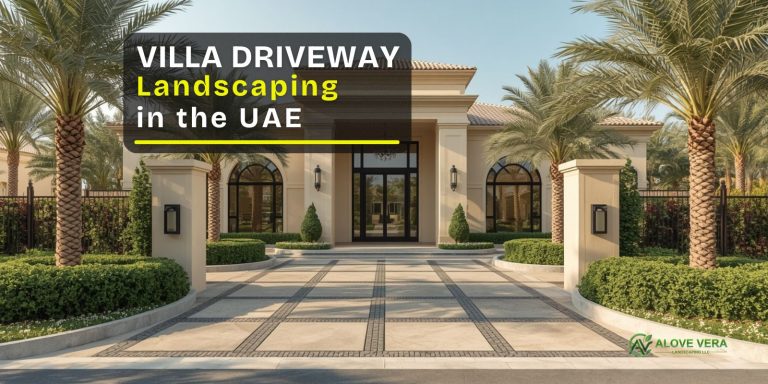
- Use of light-tone porcelain or stone around pools instead of dark paving.
- Combining greenery, shade structures and carefully selected water features to improve the visual and thermal comfort of outdoor areas.
Applied at a community scale, these ideas will define the Future of Urban Landscaping in the UAE: streets, parks, courtyards and rooftops designed as cooler, more usable outdoor environments, not just open space.
Private Villas and the Future of Green Spaces in UAE
For individual homeowners, the future of green spaces in UAE is not only about city-wide plans. It also affects how you design your own villa garden.
Trends that will likely gain strength:
- More shaded lounges and outdoor kitchens instead of full-plot lawns.
- Stronger emphasis on tree placement for privacy and cooling.
- Mix of native, drought-tolerant plants with a few special features in key spots.
- Better integration of irrigation and lighting into the design from day one.
This follows the same logic as larger green spaces in UAE cities: make every square metre do more than one job (shade, privacy, comfort, visual interest) with realistic maintenance.
Working toward this now means your villa landscape will still feel current and practical several years from now.
How AV Landscaping Fits Into the Future of Green Spaces in UAE
AV Landscaping works across the UAE on villa, commercial and institutional projects, helping clients create practical, climate-aware and attractive outdoor environments:
- Climate-aware landscape design for private and shared outdoor areas.
- Construction of terraces, pathways, pergolas, boundary and feature walls.
- Planting schemes that use native and adapted species where practical.
- Irrigation system design focused on water efficiency.
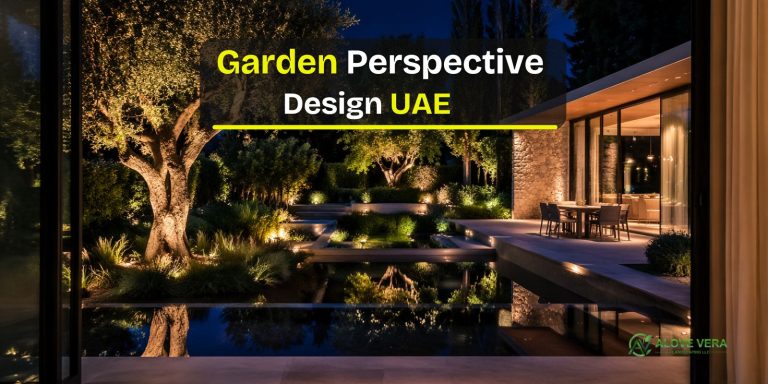
- Outdoor lighting that makes spaces safe and pleasant at night.
- Maintenance services that keep green areas healthy over time.
Planning a new garden or upgrading an outdoor area in Dubai, Abu Dhabi, Sharjah or another emirate? Explore https://avlandscaping.ae to learn more about landscape design, construction, irrigation and maintenance services. The team can help you plan an outdoor space that suits your property, budget and long-term requirements.
FAQs
1. What is the future of green spaces in UAE cities?
The future will focus on shaded areas, climate-adapted planting, water efficiency, walkable spaces and multi-use community landscapes.
2. Why are green spaces important in UAE communities?
They can improve outdoor comfort, support biodiversity, encourage social activity and contribute to more liveable neighbourhoods.
3. How much does green space landscaping cost in the UAE?
Costs depend on the project size, materials, irrigation, planting, shade structures and site conditions.