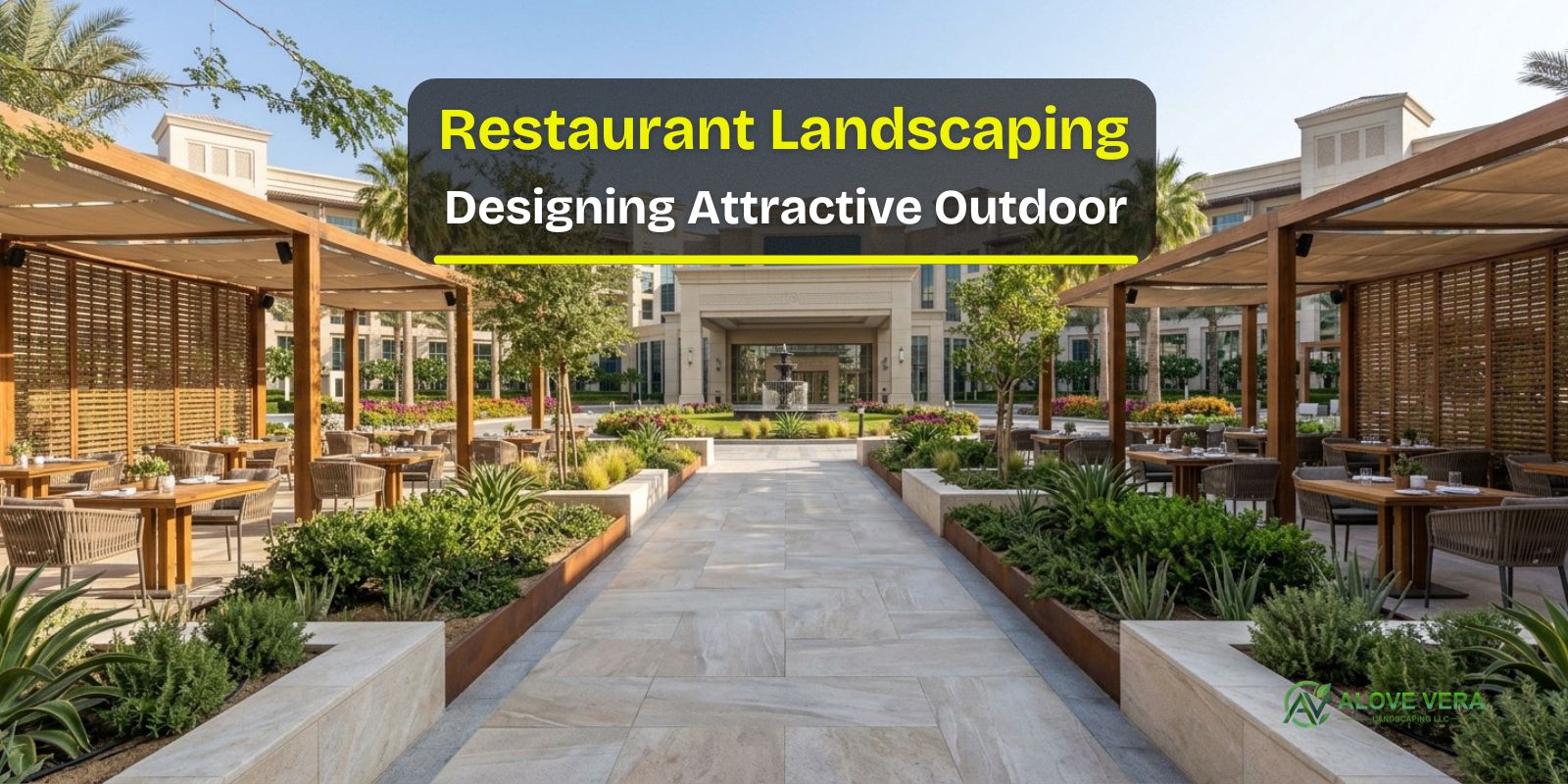
Restaurant Landscaping: Designing Attractive Outdoor Customer Areas
Restaurant landscaping should do more than make an outdoor area look green. It should help guests feel comfortable, guide them naturally to their tables, protect them from the strong UAE sun and give the restaurant a clear identity. A well-planned terrace, courtyard or garden can also make better use of space that might otherwise sit empty.
Thoughtful restaurant landscaping considers how the area will work during lunch, dinner, weekends and special events. Plants, paving, lighting and shade must support the dining experience without creating extra work for staff. This guide explains the main points to consider when planning restaurant outdoor areas in the UAE.
Start With How Guests Will Use the Space
Before choosing plants or furniture, look at the practical purpose of the outdoor area. Is it a small pavement terrace for coffee, a courtyard for evening dining, or a larger garden used for private functions? Each type of space needs a different layout.
Restaurant landscaping should support customer movement as well as appearance. Guests should be able to find the entrance, understand where to wait and reach their tables without passing through service routes. Staff also need enough room to carry food and clear tables safely.
When reviewing the site, consider:
- The route from the restaurant entrance to the outdoor seating
- The number and size of tables required
- Space for chairs to move back comfortably
- Access for guests with limited mobility
- A clear route for food service and cleaning
- Separate waiting, dining and service areas where needed
- Emergency access and any applicable local requirements
Do not fill every available corner with tables. A slightly more open layout often feels calmer and is easier to operate during busy periods.
Plan Seating Zones and Flexible Layouts
Good restaurant landscaping divides larger outdoor areas into smaller, more comfortable zones, making restaurant landscaping more practical for different dining needs. Low planters, changes in paving, pergolas and small groups of shrubs can define these spaces without building solid walls.
For example, a restaurant courtyard might include:
- A shaded area for daytime dining
- A more open section for evening use
- A quieter corner for small groups
- A flexible space for larger bookings
- A planted buffer between tables and nearby traffic
Loose furniture can be useful where layouts change regularly. Fixed seating may suit narrow edges or areas where tables need to remain in a set position. In either case, keep enough free space for cleaning, deliveries and maintenance.
Use Shade to Improve Daytime Comfort
In the UAE, restaurant landscaping has to respond to heat, glare and strong sunlight. A dining area that looks attractive in photographs may remain empty if guests cannot sit there comfortably.
Shade can be provided in several ways:
- Pergolas with slatted roofs or suitable fabric covers
- Retractable awnings where building conditions allow
- Shade sails over selected seating areas
- Mature trees positioned away from food service routes
- Building extensions or screens that block low afternoon sun
Check sun direction before fixing the layout. Western and exposed areas can become particularly uncomfortable later in the day. Outdoor fans may improve air movement in suitable spaces, while misting systems need careful consideration because of water use, humidity and maintenance.
Trees should not be planted so close to tables that falling leaves, flowers or fruit regularly create cleaning problems. Shade structures also need durable materials and proper installation for local wind conditions.
Choose Plants That Suit Dining Areas
Planting is where restaurant landscaping adds softness, colour and privacy. However, restaurant plants have a different job from those in a quiet villa garden. They must tolerate the site conditions while remaining tidy around customers.
Useful planting choices may include:
- Hardy shrubs for structure and screening
- Date palms or other suitable trees for height and shade
- Compact groundcovers to reduce exposed soil
- Herbs in raised planters for a fresh, edible-garden theme
- A limited amount of seasonal colour near entrances and key views
Avoid plants with large thorns beside walkways and seating. Strongly dropping fruit, heavy sap or very dense growth can also create maintenance issues. Highly fragrant plants should be used carefully, as strong scents are not always welcome around food.
Plant heights matter too. Low planting keeps the space open, while taller shrubs can screen parked cars, service areas or neighbouring properties. Do not let planting block signs, entrances, lighting or security views.
Select Safe and Durable Ground Surfaces
Well-planned restaurant landscaping also helps create a pleasant visual connection between dining spaces and surrounding greenery.
Restaurant landscaping also includes the surfaces beneath tables, chairs and foot traffic. Paving should be stable, reasonably slip-resistant and easy to clean. Small gravel can look attractive, but it is usually difficult to walk on and impractical directly beneath dining furniture.
Common options include:
- Quality interlock for paths and utility areas
- Exterior-grade porcelain or suitable stone for dining terraces
- Concrete paving with a finish appropriate for outdoor use
- Timber-look decking in selected areas, provided it is properly specified and maintained
Pay attention to levels and drainage. Irrigation water and rain should not collect around table legs or doorways. Changes in level need to be clear, and accessible routes should be considered from the beginning rather than added later.
Furniture legs can catch on uneven surfaces, so check the finished paving before installing the full seating layout.
Use Lighting for Safety and Atmosphere
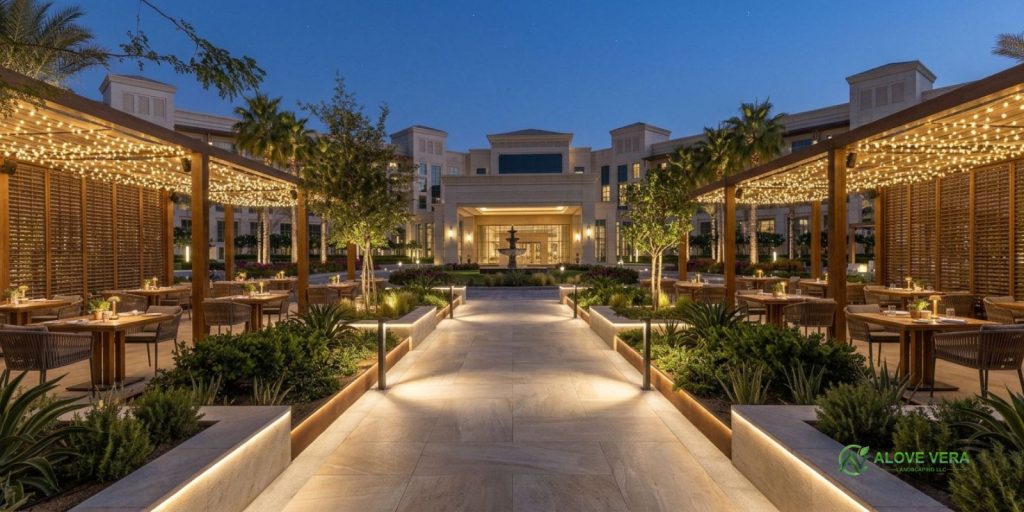
Lighting is another area where effective restaurant landscaping can improve both function and mood. Guests need enough light to move safely, read menus and recognise steps, but overly bright fittings can make an outdoor dining area feel harsh.
A balanced lighting plan may combine:
- Low-level lights beside main paths
- Step lights where levels change
- Warm feature lighting for trees and planting
- Wall or pergola lighting around seating areas
- Entrance lighting that keeps signage visible
Aim lights carefully to avoid glare into guests’ eyes or nearby windows. Choose outdoor-rated fittings and plan access for bulb replacement and repairs. Timers and controls should be simple enough for authorised staff to manage.
Keep Irrigation and Maintenance Out of the Dining Experience
Behind every reliable outdoor area, restaurant landscaping depends on suitable irrigation and drainage. Programme irrigation outside operating hours where practical to reduce spraying onto paths and furniture. Sprinklers, where used, should be directed away from customer areas.
Programme irrigation outside operating hours where practical. Check regularly for blocked emitters, leaks and overspray, as these can lead to dead plants, slippery paving or water stains.
A simple maintenance routine should cover:
- Daily removal of litter and visible plant debris
- Regular sweeping and cleaning of dining surfaces
- Plant health and irrigation checks
- Pruning before branches interfere with tables or lights
- Mulch replacement and weed control
- Seasonal adjustment of watering schedules
- Prompt replacement of failed plants in prominent positions
Standing water should be dealt with quickly, and irrigation equipment should remain accessible without disturbing guests.
Connect the Outdoor Design With the Restaurant’s Identity
Restaurant landscaping can reinforce the style of the business while creating a more welcoming and memorable outdoor setting. A casual café may use herbs, simple timber seating and relaxed planting. A fine-dining courtyard may need a more controlled layout, restrained colours and subtle feature lighting.
Consider how the outdoor area looks from inside the restaurant as well as from the street. Framed views, a feature tree or a well-planted wall can make the indoor and outdoor spaces feel connected.
Noise and privacy also deserve attention. Planting can soften visual distractions, but it should not be expected to solve serious traffic noise on its own. Walls, screens, layout changes and the placement of speakers may all play a part. Music levels should suit the setting and any local requirements.
Plan the Budget Around Long-Term Use
For busy operators, restaurant landscaping should be assessed on construction cost, daily operation and future maintenance together. A cheap installation can become expensive if surfaces stain easily, plants fail repeatedly or irrigation causes regular disruption.
Costs are usually affected by:
- The amount of paving and structural work
- Pergolas, screens and shade systems
- Plant sizes and planting density
- Irrigation and drainage requirements
- Lighting and electrical work
- Furniture, planters and decorative finishes
- Access to the site and removal of existing materials
If the budget is limited, prioritise safe surfaces, shade, irrigation and the main customer route. Additional planting and decorative features can often be added in phases.
How AV Landscaping Can Help
AV Landscaping provides restaurant landscaping design, construction, planting, irrigation and maintenance services across the UAE. Our team can work on restaurant terraces, courtyards, gardens and outdoor customer areas, courtyards, gardens and outdoor customer areas, taking account of guest movement, planting conditions, hardscape requirements and ongoing care.
Services are available for independent restaurants, cafés, hotels and other commercial properties in Dubai, Abu Dhabi, Sharjah and the other emirates. To discuss your site or request a consultation, visit:
https://avlandscaping.ae
FAQs
1. What is the most important part of restaurant landscaping?
Comfort and usability come first. Restaurant landscaping should provide safe access, suitable shade, practical seating, and reliable irrigation before adding decorative features.
2. Which plants work well around restaurant seating?
Use tidy, climate-suitable plants with few thorns, sap, or heavy fruit drop. The final choice depends on sun exposure, available space and maintenance capacity.
3. Can an existing restaurant patio be improved without full replacement?
Often, yes. Targeted changes to shade, planting, lighting and worn paving can improve an existing patio while retaining useful parts of the layout.