Sustainable Landscaping Trends Transforming the UAE in 2026
Landscaping across the UAE is going through a big shift. Rising water costs, tougher sustainability goals and hotter summers are forcing property owners to rethink how outdoor spaces are planned and maintained.
In 2026, Sustainable Landscaping Trends in the UAE focus on:
- Using much less water
- Choosing plants that can handle the climate
- Reducing long‑term maintenance costs
- Making outdoor areas comfortable enough to actually use in summer
- Supporting wider environmental goals
This guide explains the main Sustainable Landscaping Trends shaping Dubai, Abu Dhabi, Sharjah and other emirates, and how you can apply them to your own villa, commercial property or public project.
1. Why Sustainable Landscaping Matters So Much in the UAE
The UAE’s hot desert climate means extreme summer temperatures, very low rainfall and high evaporation. The UAE Ministry of Climate Change and Environment highlights that the country is among the most water‑stressed regions in the world, so saving water is a national priority.
Source: Ministry of Climate Change & Environment – https://www.moccae.gov.ae
At the same time, cities like Dubai and Abu Dhabi are expanding, with more parks, road landscapes and public spaces. Municipalities are pushing sustainable landscaping in the UAE, including:
- Efficient irrigation systems
- Treated wastewater reuse in large projects
- Climate‑appropriate plant choices
Example: Dubai Municipality initiatives on treated wastewater and irrigation: https://www.dm.gov.ae
Ignoring Sustainable Landscaping Trends now usually leads to:
- Higher water bills
- Plants that fail in summer
- Landscapes that need constant repair or replanting
So sustainability is not only “good for the environment”; it is also smart business and smart home planning.
2. Key Sustainable Landscaping Trends in the UAE for 2026
2.1 From “Full Lawn” to Smart Green Planning
Older gardens in Dubai or Sharjah often had large lawns from wall to wall. One of the strongest UAE landscaping trends in 2026 is a shift towards:
- Smaller, functional lawn areas (for play or events)
- More planting beds with shrubs and groundcovers
- A clear mix of paving, gravel and planting
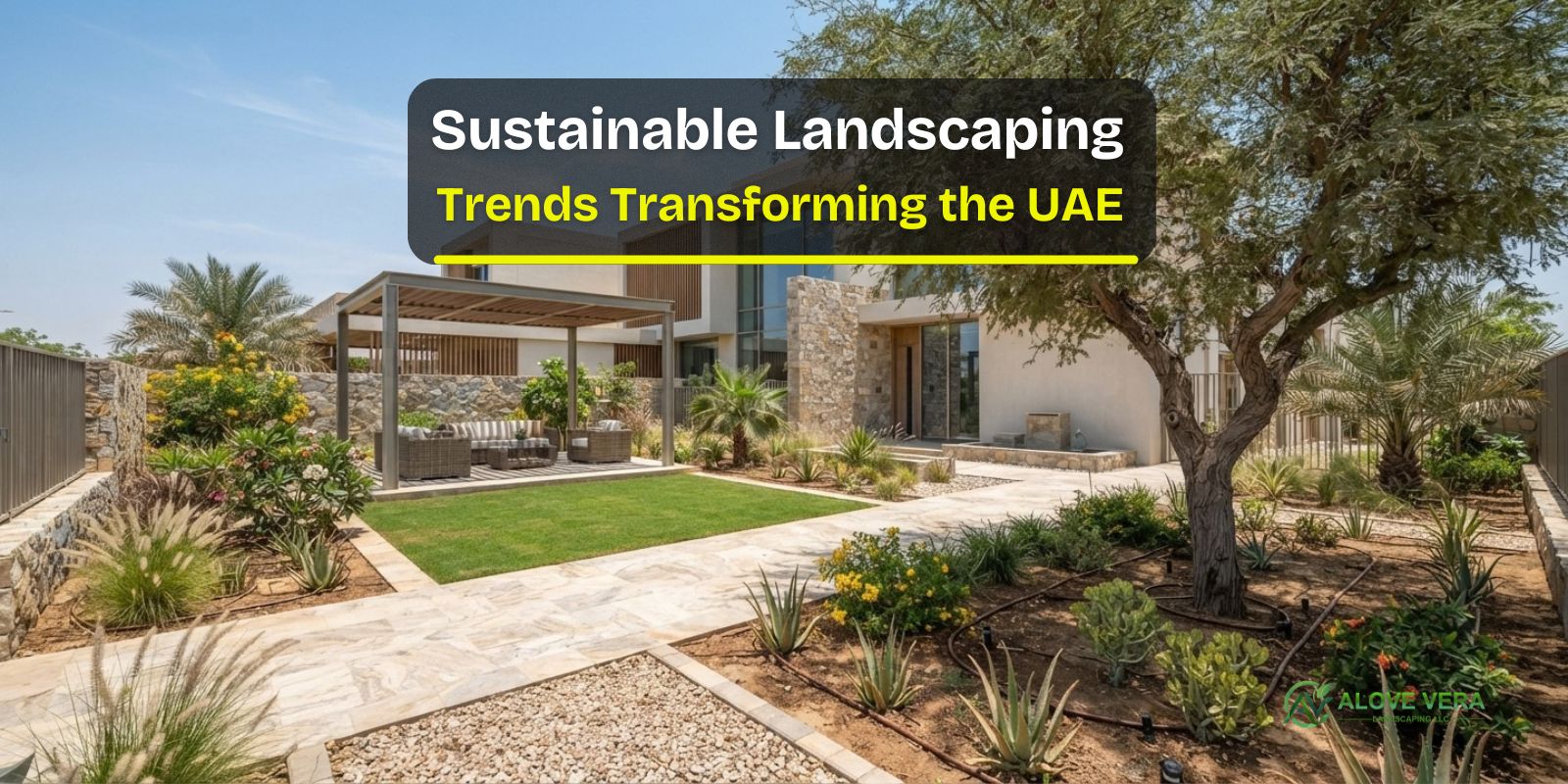
This sustainable landscaping approach gives you green areas where you actually use them, while cutting water use and maintenance in hidden or unused corners.
How to apply this trend in a villa garden:
- Keep one main lawn near the house for children or family gatherings
- Convert far corners to gravel, stone or low‑water planting
- Use boundary shrubs and trees instead of grass along walls
This is one of the simplest Sustainable Landscaping Trends you can follow, and the water savings show quickly.
2.2 Native and Desert‑Adapted Plants Take the Lead
Another major landscaping trend in 2026 is the wider use of native and desert‑adapted plants. These plants are used to hot, dry, sometimes salty conditions, so they:
- Need less irrigation
- Handle strong sun better
- Suffer less from pests and diseases
Common choices for landscaping in the UAE include:
- Trees: Ghaf, Sidr, Neem, Date palm
- Shrubs: Bougainvillea, Desert rose, Atriplex, Tecoma
- Groundcovers: Lantana, Gazania, Portulaca, Carissa
- Grasses (where suitable): Pennisetum, some ornamental species
You can still add colour with seasonal flowers, but the backbone of the garden follows Sustainable Landscaping Trends with tough, climate‑ready plants.
Practical examples:
- In a Dubai villa front yard, use Ghaf or Neem trees for shade, with Bougainvillea and Lantana underneath
- In a Sharjah office car park, plant hardy shrubs and groundcovers in islands instead of small patches of lawn that quickly burn
2.3 Smart Irrigation and Better Water Management
If you look at the most important Sustainable Landscaping Trends, irrigation is near the top of the list. Water is limited and expensive, so irrigation is changing.
Current UAE landscaping trends in irrigation:
- Drip irrigation as standard
Drip lines and emitters deliver water straight to the root zone, cutting evaporation and waste. - Smart irrigation controllers
These systems can:- Adjust watering according to season
- Respond to soil moisture sensors
- Reduce watering during cool or cloudy days
- Hydrozoning
Grouping plants by water need:- High: lawn and thirsty flowers
- Medium: many shrubs and hedges
- Low: native and desert species
- Treated sewage effluent (TSE) in big projects
Many large public and commercial landscapes use TSE under local authority rules, a key part of sustainable landscaping in the UAE.
Source: Dubai Municipality – Treated wastewater reuse: https://www.dm.gov.ae
What you can do on your property:
- Ask for separate irrigation zones for lawn, shrubs and native areas
- Use drip for most plants and keep sprinklers only where really needed
- Check your system each season for leaks, blocked emitters and overspray
Adopting these Sustainable Landscaping Trends in irrigation usually gives one of the biggest returns in cost savings.
2.4 Shaded Outdoor Living and Microclimate Design
Good sustainable landscaping in the UAE also means designing spaces people can use even in hot months. This is where microclimate design comes in.
Key elements:
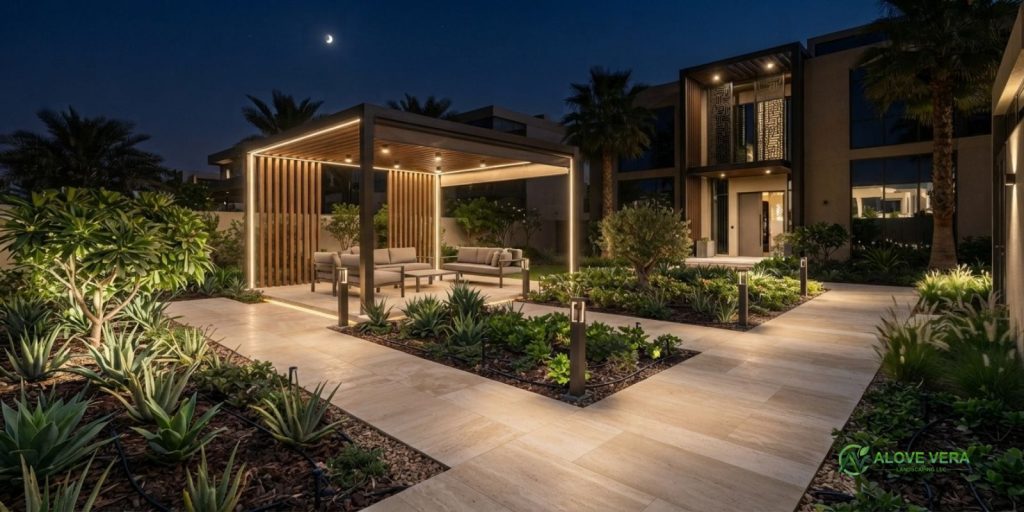
- Pergolas and gazebos with slatted roofs or fabric for shade
- Shade sails over seating, play areas and even parking
- Trees placed for shade on terraces, paths and lawns
- Courtyard layouts that protect from harsh winds and direct sun
These Sustainable Landscaping Trends are obvious in newer backyard landscaping in Dubai and Abu Dhabi, where families want outdoor rooms, not just open lawn.
Why this is sustainable:
- Shaded soil and plants lose less water
- Hard surfaces heat up less, improving comfort
- People use the garden more, so the space has real value
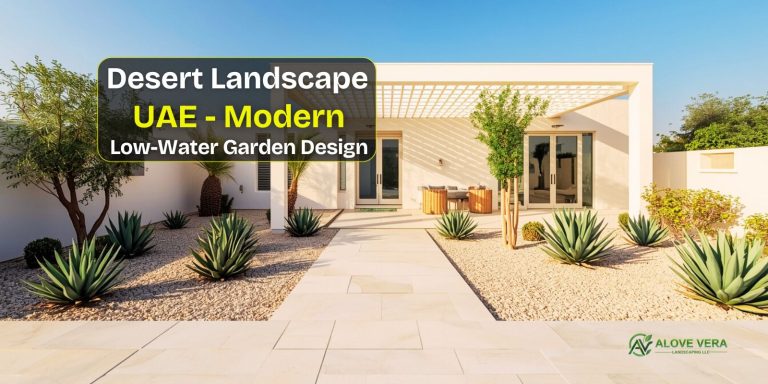
2.5 Less Grass, More Groundcovers and Hardscape
Large grass areas need a lot of water, mowing and fertiliser. A big sustainable landscaping trend in 2026 is to:
- Keep lawn only where there is a clear use
- Use groundcovers and shrubs for green coverage elsewhere
- Introduce more paving, gravel and stepping stones
Examples of this UAE landscaping trend:
- A villa front yard in Abu Dhabi with a central paved path, side planting beds and only a small lawn patch near the entrance
- A hospital courtyard in Sharjah with raised planters, interlock walkways and no high‑maintenance grass
By following these Sustainable Landscaping Trends, you still get a pleasant green feel, but with much lower water consumption.
2.6 Energy‑Efficient Outdoor Lighting
Outdoor lighting has also become part of Sustainable Landscaping Trends in 2026:
- LED lights for paths, walls and trees use far less energy and last longer
- Solar lights where open sky exposure is good (e.g. garden edges, boundary paths)
- Smart timers and sensors to avoid lights staying on all night in empty areas
In commercial and government projects, this is now a standard part of sustainable landscaping in the UAE. For villas, simply switching to LED and adding timers is a quick win.
2.7 Smarter Pool and Water Feature Design
Swimming pools and water features are still popular in UAE landscaping, but designs now follow Sustainable Landscaping Trends:
- Smaller pools with better filtration instead of large, underused pools
- Shaded pools to reduce evaporation and keep water cooler
- Efficient pumps and variable‑speed systems to cut energy use
- Minimal‑water or recirculating water features instead of constant refilling
For some projects, dry “rock streams” or decorative gravel beds replace traditional ponds, keeping the look of a water line without ongoing water use.
2.8 Materials That Handle UAE Conditions
Sustainable landscaping is also about choosing materials that last in heat, sun and salty air:
- Treated wood or composite for pergolas and seating
- UV‑resistant outdoor furniture fabrics
- Properly sealed natural stone or quality concrete pavers
- Rust‑resistant metals for railings and structures
Long‑lasting materials mean less replacement, less waste and lower life‑cycle cost.
3. Applying These Trends to Different UAE Properties
3.1 Villa and Residential Gardens
For villas in Dubai, Abu Dhabi, Sharjah and other emirates, sustainable design in 2026 usually includes:
- Zoned irrigation system with drip lines for most plants
- One modest, shaded lawn (if needed) instead of full‑lawn gardens
- Native and desert‑adapted trees for shade along boundaries
- A pergola or gazebo for outdoor seating, possibly with climbing plants
- Mix of gravel, stepping stones and groundcovers in low‑use areas
- LED and/or solar lighting on pathways and key features
Common mistakes to avoid:
- Choosing plants only for flowers, ignoring water and heat needs
- Installing lawn in deep shade (it will struggle and use more water)
- Allowing irrigation sprinklers to hit walls, windows and roads
- Over‑complicated designs that are hard to maintain
3.2 Commercial and Office Landscaping
Offices, retail sites and mixed‑use developments across the UAE are shifting toward:
- Simple, clean planting layouts with drought‑tolerant species
- Strong focus on shaded walkways and staff rest areas
- Durable paving, with planting in key, visible zones
- Smart central irrigation systems linked to facility management
Practical ideas:
- Use hardy trees for shaded car parks in Abu Dhabi or Al Ain
- Design simple raised planters at building entrances with low‑water shrubs
- Avoid large lawn areas that require constant care and frequent re‑turfing
3.3 Hospitals, Schools and Government Projects
Institutional and government entities are under growing pressure to demonstrate sustainability in public landscapes.
Common features now include:
- Use of treated wastewater (TSE) under authority guidelines
- Native plant palettes for roadside and median planting
- Shaded seating areas for patients, staff and students
- Clear separation between high‑use green areas and low‑maintenance zones
For example, hospital courtyards in Dubai or Sharjah often combine:
- Comfortable shaded seating
- Raised planters with low‑allergen, hardy plants
- Safe, non‑slip interlock pathways
- Limited lawn, only where truly needed for therapy or recreation
4. How to Plan a Sustainable Landscape in the UAE
If you are planning a new garden or upgrading an older landscape, here is a simple approach:
- Define how you will use the space
Children’s play? Entertaining? Staff breaks? Patient recovery? Event lawn? - Set water and maintenance limits
Be realistic about your budget for monthly water and gardening. - Choose structure first, then decoration
- Trees, pergolas, pathways and main seating areas
- Then shrubs, groundcovers and finally seasonal flowers
- Design irrigation early
Plan zones, mainlines and valve locations with the planting plan, not after. - Select plants suited to UAE conditions
Ask for water‑use information and sun requirements for each plant. - Plan for shade
Use pergolas, gazebos, shade sails and trees to make spaces usable in summer. - Think long term
Spend a bit more on durable materials and efficient systems; they usually pay back in a few years through lower bills and less replacement.
5. How AV Landscaping Can Help
AV Landscaping works on sustainable landscaping in the UAE across villas, residential communities, commercial sites and government projects.
The team can assist with:
- Landscape design focused on water efficiency and UAE‑appropriate plants
- Garden construction, including pergolas, gazebos, pathways and boundary walls
- Smart irrigation design and installation
- Pool landscaping and outdoor seating areas
- Ongoing garden and landscape maintenance
Projects are carried out across all emirates, including Dubai, Abu Dhabi, Sharjah and the Northern Emirates.
AV Landscaping provides sustainable landscape design, construction and maintenance services across all emirates in the UAE. From villa gardens and private backyards to commercial, institutional and government projects, the team plans each outdoor space around local climate conditions, water‑efficient irrigation and long‑lasting materials. To see more about their work and services, visit their website: https://avlandscaping.ae
FAQs
What is sustainable landscaping in the UAE?
It means designing gardens with lower water use, climate-suitable plants, efficient irrigation and durable materials.
Which plants are best for sustainable landscaping in the UAE?
Native and well-adapted plants such as Ghaf, Sidr and suitable drought-tolerant species are commonly considered.
How can sustainable landscaping reduce water use?
Efficient irrigation, smaller lawn areas, suitable plants, soil improvement and mulching can all reduce unnecessary water use.