Why Native and Adapted Plants Are Becoming More Important in UAE Landscaping
If you have tried to keep a garden alive through a UAE summer, you already know the problem. Some plants look great in winter, then burn or die by July. This is one reason Native and Adapted Plants are now a serious part of landscape planning in Dubai, Abu Dhabi, Sharjah and other emirates.
For villa owners, facility managers and developers, choosing the right species is no longer only about looks. It affects water bills, maintenance effort, plant survival and how comfortable your outdoor space feels during the hottest months.
1. What Are Native and Adapted Plants?
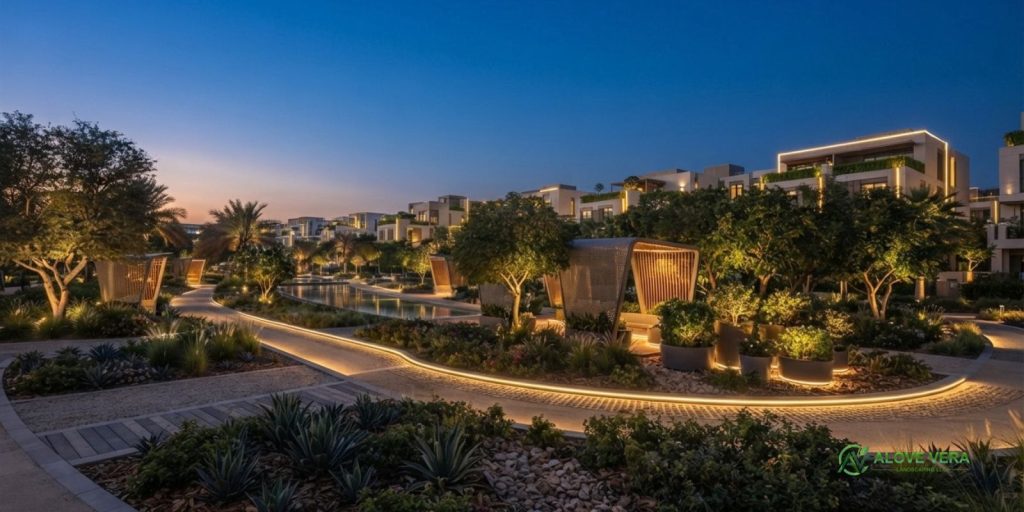
It helps to be clear on the terms before planning any planting scheme.
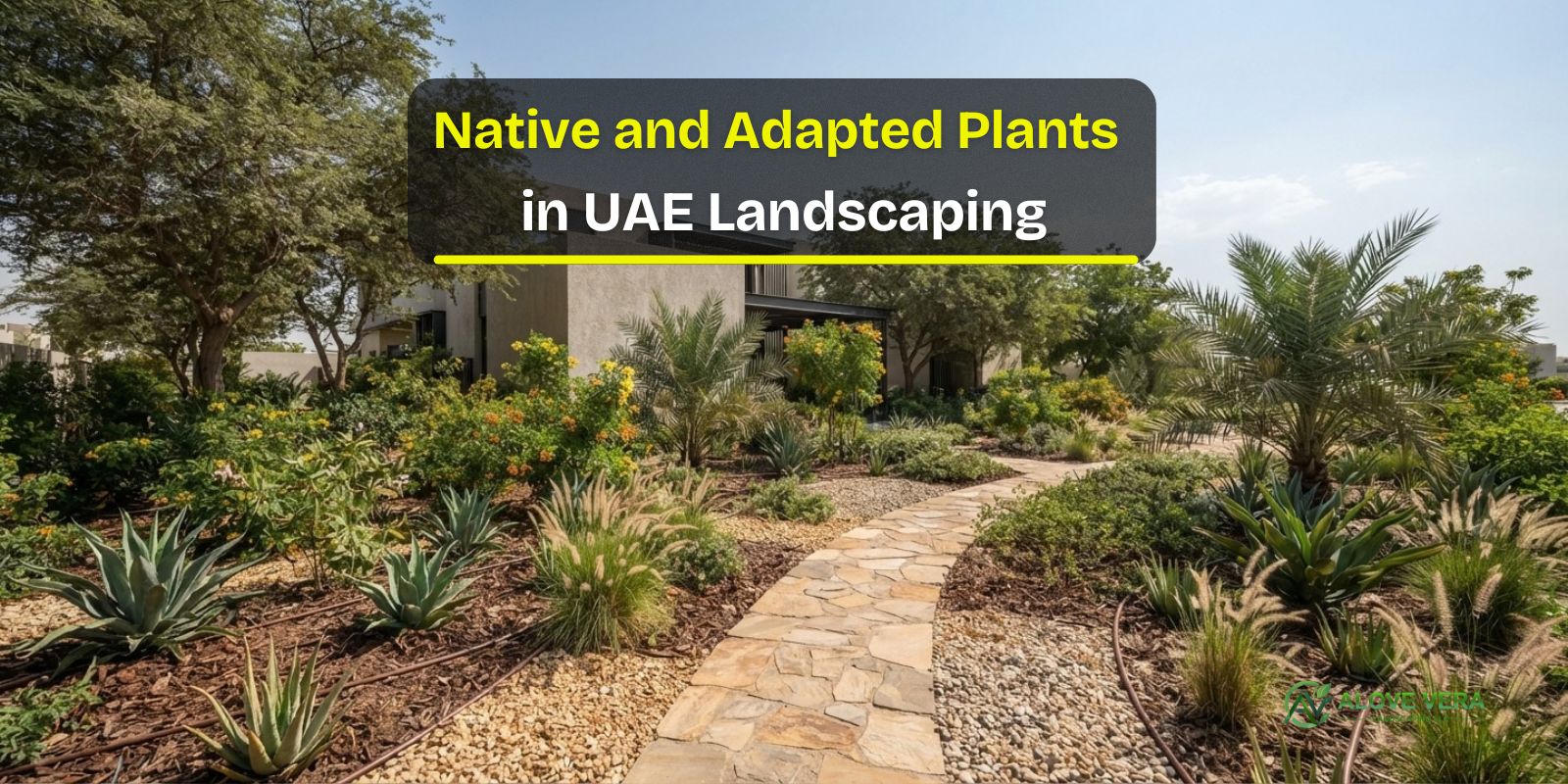
- Native plants are species that grow naturally in the UAE and wider Arabian Peninsula. They have evolved with local heat, wind, soil and rainfall patterns.
- Adapted plants come from other regions with similar climates, such as parts of North Africa, the Mediterranean, Australia or Mexico. They are not local, but they perform well here when planted and managed correctly.
Together, native plants are the backbone of climate-sensitive landscaping in the UAE.
Examples often seen in UAE projects:
- Ghaf (Prosopis cineraria)
- Sidr (Ziziphus spina-christi)
- Date palms and some other palm species
- Bougainvillea
- Various acacias, succulents and desert grasses
The exact selection depends on soil, salinity, water quality, and how the space will be used.
2. Why UAE Conditions Push Owners Towards Native and Adapted Plants
The UAE’s climate is demanding. The National Center of Meteorology records long, very hot summers with high solar radiation and, in coastal areas, high humidity (NCM, https://www.ncm.ae).
That environment creates real problems for many imported ornamental species:
- Leaves burn and drop in extreme heat
- Root systems struggle in sandy or saline soils
- High water demand becomes costly and hard to sustain
- Pest and disease pressure increases when plants are stressed
Using adapted plants for UAE gardens reduces this stress. They already cope with:
- Long dry periods
- Strong sun and reflected heat from walls and paving
- Sandy soil with low organic content
- Salt in soil or irrigation water (for certain species)
In practical terms, suitable plant selection can reduce avoidable maintenance work and irrigation demand.
3. Water Use, Cost and Sustainability
Water is the strongest practical argument for Climate-Adapted landscaping in UAE landscaping.
The UAE relies heavily on desalinated water, which is energy-intensive, and sustainability and efficient water use are consistently promoted through federal and local initiatives (UAE Government Portal, https://u.ae).
A planting design based on drought-tolerant plants UAE can help in several ways:
- Lower irrigation volumes once plants are established
- Fewer replacements each year, reducing material and labour costs
- More predictable long-term maintenance budgets
- Better alignment with community rules and future water-use expectations
For example, a villa that replaces large mixed flower beds with:
- A few shade trees
- Grouped shrubs with similar water needs
- Gravel or mulch instead of open soil
can often maintain a strong look with far less weekly watering than a traditional lawn-and-flower layout.
4. Design Benefits: Structure, Texture and Character
Some homeowners worry that native and adapted plants will make a garden look plain or “desert-like”. In practice, the opposite is usually true when the design is done well.
These plants offer:
- Strong shapes and silhouettes (ghaf, acacia, palms, agaves)
- Interesting bark and trunk character
- Fine or bold foliage textures
- Seasonal flowers and pods in many species
A good climate-adapted landscaping UAE approach usually mixes:
- Trees for shade and structure
- Shrubs for privacy, screening and middle-height interest
- Groundcovers and grasses to reduce bare soil and soften edges
- Accent species such as succulents or flowering shrubs in key spots
That layered structure is what makes a garden feel designed, not just planted. Choosing native and adapted plants supports this without demanding heavy irrigation.
5. Practical Uses in Villas, Communities and Commercial Sites
Different property types can apply native and adapted plants in different ways.
Villa Gardens
- Use hardy shade trees to cool terraces and walls
- Plant tolerant shrubs along boundaries for privacy
- Keep small, well-defined lawn areas only where you actually use them
- Group high-interest planting near seating, doors and walkways
Residential Communities
- Streets and medians planted with tough, low-water species
- Shaded walking routes using proven UAE landscaping plants
- Play areas framed with durable shrubs rather than delicate flower beds
Offices, Hospitals and Public Spaces
- Simple, repeatable planting patterns that are easier to maintain
- Focus on shade, dust reduction and clean sightlines
- Species that tolerate intensive use and occasional neglect
In all these settings, native and adapted plants help maintain a consistent appearance throughout the year with less risk of major failures.
6. Common Mistakes When Using Native and Adapted Plants
Choosing local or climate-suited species is only part of the job. Several mistakes are still common.
Mistake 1: Treating “native” as “no care needed”
Even hardy species need:
- Proper soil preparation
- Regular watering during establishment, with the duration depending on the species, season and site conditions.
- Basic pruning and inspection
Mistake 2: Mixing plants with very different water needs
Putting thirsty ornamentals in the same irrigation zone as drought-tolerant plants UAE leads to overwatering some and stressing others. Zoning is essential.
Mistake 3: Ignoring soil and salinity
Sandy, compacted or saline soils must be tested and improved where needed. Adding organic matter and proper drainage helps Native and Adapted Plants perform much better.
Mistake 4: Planting too densely
Some species grow large. Overplanting looks good in year one, then becomes crowded and expensive to manage later.
Mistake 5: Only choosing for looks
Wind exposure, sun angles and use of the space matter. A plant that suits a sheltered courtyard may fail on an exposed roadside.
7. How to Plan a Planting Scheme Around Native and Adapted Plants
A simple, practical process works well for most projects:
- Assess the site
- Sun and shade patterns
- Wind direction
- Soil type and drainage
- Water quality and available irrigation
- Define use zones
- Seating and dining
- Play and circulation
- Screening and privacy
- Visual focal points
- Select plant groups
- Shade trees
- Screening shrubs
- Low-water groundcovers
- A limited number of feature plants
- Design irrigation to match planting
- Separate zones for trees, shrubs and any lawn
- Use drip lines for beds
- Adjust schedules seasonally
- Plan maintenance from the start
- Pruning cycles
- Mulching and soil top-ups
- Seasonal inspection of irrigation
When properly selected and maintained, native and adapted plants can provide more practical long-term results than planting schemes that depend on high water use and frequent replacement.
8. How AV Landscaping Works With Native and Adapted Plants
AV Landscaping provides landscape design, construction, planting, irrigation and maintenance services across the UAE for villas, commercial properties and institutional sites.
Typical support includes:
- Site assessment and plant selection suited to local soil and climate
- Planting plans that balance shade, privacy and visual interest
- Irrigation design with zoning for different water needs
- Construction of paths, terraces, pergolas and other supporting elements
- Ongoing maintenance to keep planting healthy through summer and winter
If you are planning a new garden or reworking an existing one, using native and adapted plants can reduce water use, cut long-term costs and keep your outdoor space looking consistent throughout the year.
You can view services and get in touch through https://avlandscaping.ae to discuss your property, your site conditions and the type of planting that would suit it best.
FAQs
1. What are native and adapted plants?
Native plants naturally occur in the region, while adapted plants come from other climates but can perform well in UAE conditions.
2. Are native plants suitable for UAE villa gardens?
Yes. Suitable native plants can provide shade, structure and visual interest when matched to the soil, space and maintenance plan.
3. Do native and adapted plants need irrigation?
Yes. Most plants need regular watering during establishment, although their long-term water requirements vary by species.