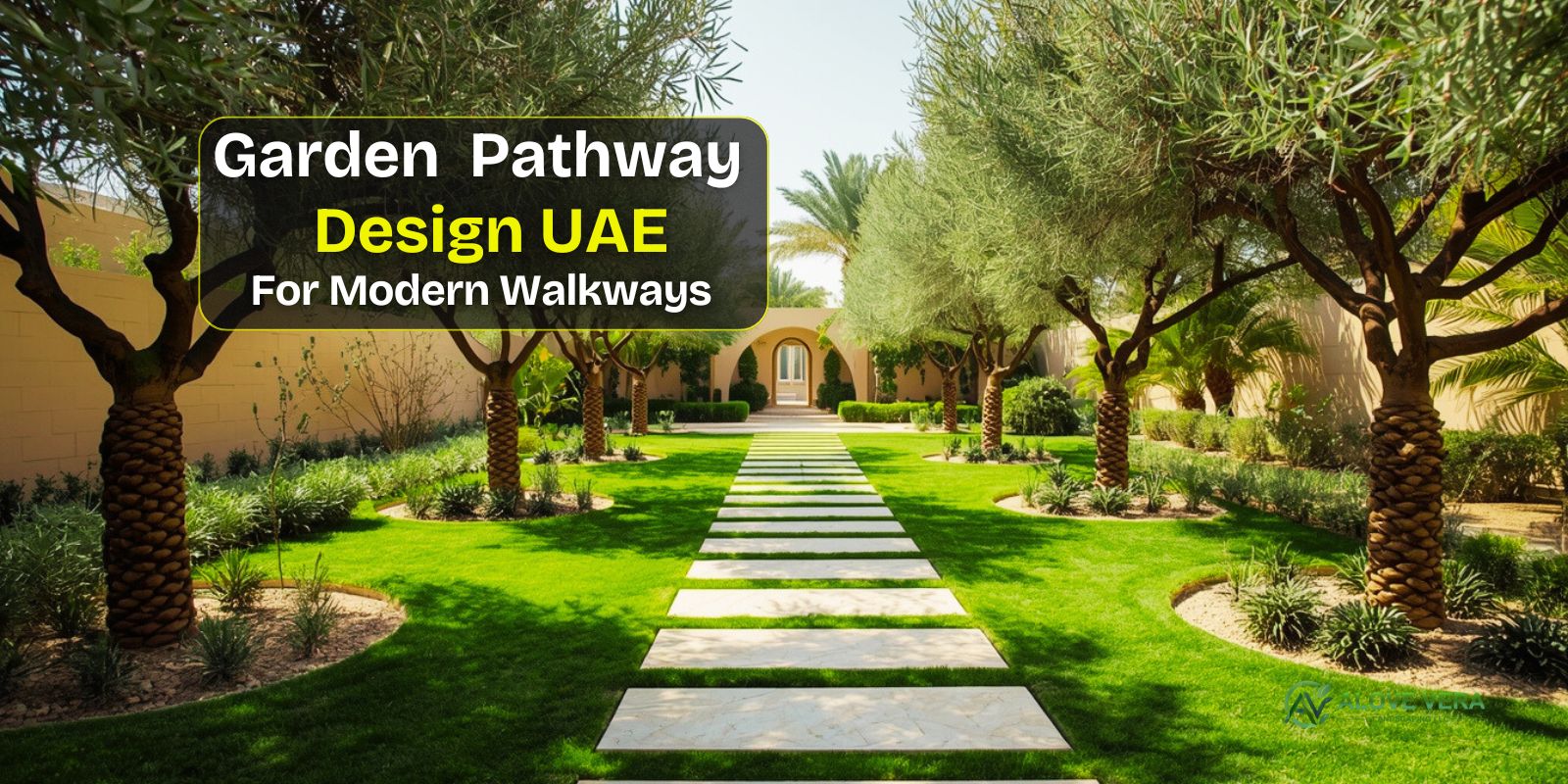
Garden Pathway Design UAE — Modern Walkway Ideas for Gardens
In the Emirates, paths do more than connect doors to lawns—they guide circulation, frame garden views, manage drainage, and stay safe during rinse-downs. Smart Garden Pathway Design starts with the climate: shade the hot façade, select cool-running non-slip surfaces, prepare stable bases, maintain 1–2% drainage falls, and light the route without glare.
When done properly, Garden Pathway Design looks refined on day one and continues performing through the extreme summer heat.
AV Landscaping designs and builds pathways that hold their line in heat, glare, and sand—combining precise detailing, smart drainage, and calm lighting that guides rather than dazzles. Explore our work or request a site visit at
https://avlandscaping.ae
Climate-First Planning for Garden Pathway Design
Every successful Garden Pathway Design in the UAE begins with sun and wind mapping. West-facing areas absorb intense heat, while narrow villa gaps often funnel wind.
For better comfort and durability:
- Place main pathways on the cooler side of the property
- Use trees or pergola screens to filter the afternoon sun
- Maintain clear sightlines between gates, seating areas, and doors
- Choose light-toned paving to reduce heat absorption
Recommended widths:
- 1.2–1.5 m for comfortable two-person movement
- 1.8 m or more near patios or outdoor dining areas
This approach turns Garden Pathway Design into a system that balances comfort, durability, and easy maintenance.
Cool Surfaces and Premium Materials
Outdoor materials in the UAE must resist heat, sand, salts, and frequent wash-downs. In Garden Pathway Design, surface selection determines grip, heat comfort, and long-term durability.
Common options include:
Porcelain Slabs
20 mm outdoor grade with R11 or R12 slip rating, perfect for entry paths and pool areas due to low water absorption.
Quartzite or Granite
Dense natural stones offering a luxury appearance and durable coping edges.
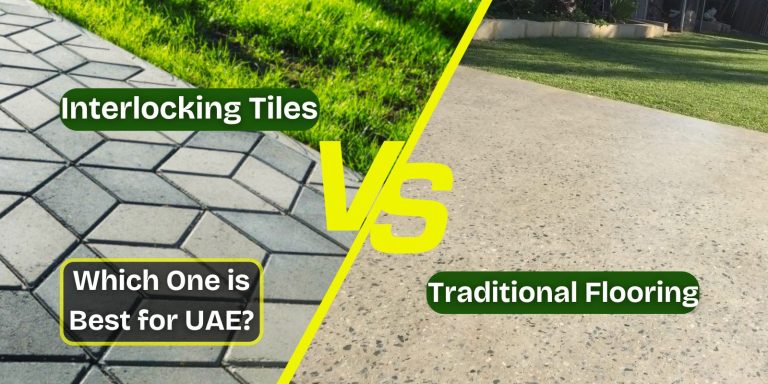
Interlock Pavers
Popular for service paths and driveways. Permeable versions reduce water runoff and heat buildup.
Thermally Modified Timber or WPC
Adds warmth for bridges or deck transitions while resisting warping.
Gravel or Resin-Bound Edges
Softens pathway borders and helps conceal irrigation lines.
Modern Garden Pathway Design also considers color tone. Lighter shades reduce heat and reflect soft lighting at night, while matte finishes reduce glare.
Strong Foundations Beneath the Surface
A premium Garden Pathway Design depends on strong base preparation, especially on sandy UAE soil.
Typical structure includes:
Sub-base
Compacted road base layers (around 150–200 mm) for standard paths.
Geotextile Layer
Separates soil from the base, preventing movement after rainfall.
Bedding Layer
Mortar beds for porcelain or sharp sand for interlock paving.
Movement Joints
Placed every 3–5 meters to accommodate expansion and prevent cracking.
Pedestal Systems
Used on rooftops or terraces to maintain drainage slopes and allow service access.
Proper preparation prevents settlement, rocking tiles, and standing water—ensuring Garden Pathway Design remains stable for years.
Gradients, Steps, and Drainage
Slope management is essential for safe Garden Pathway Design.
Recommended practices include:
- Maintain 1–2% slope away from buildings
- Install linear drains near doors or courtyard low points
- Use consistent step heights between 150–170 mm
- Keep treads 300 mm or deeper for comfort
Where slopes exceed 5%, use short ramps or stepped landings rather than a long incline.
Additional safety checks:
- Avoid dips that collect water
- Install root barriers near trees
- Use edge restraints to prevent paving movement
- Add sleeves for future irrigation or lighting cables
These details ensure Garden Pathway Design remains safe, stable, and easy to maintain.
Outdoor Lighting for Pathways
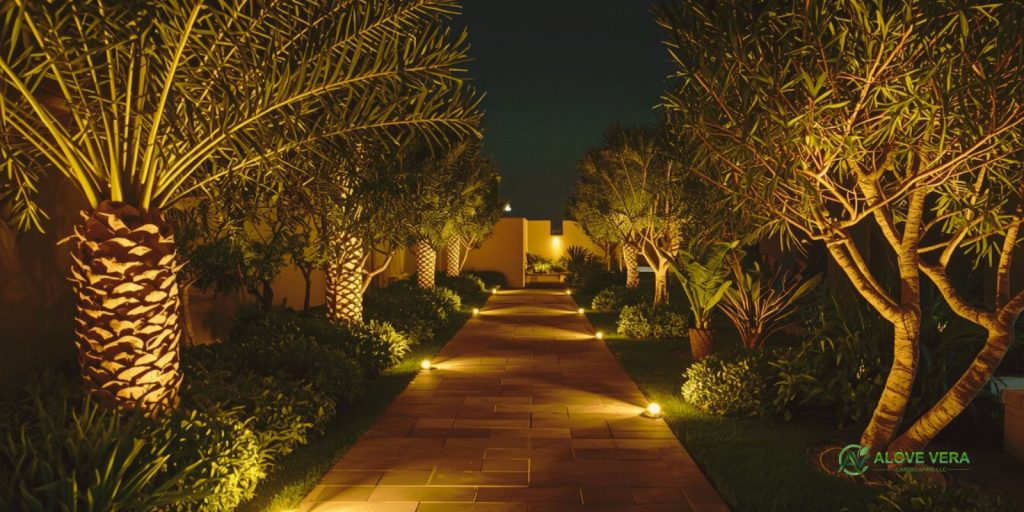
Lighting is a major part of Garden Pathway Design, especially for evening use.
In outdoor lighting Dubai projects, the goal is subtle guidance rather than bright glare.
Recommended approach:
- Use low-glare path lights to mark walking routes
- Install gentle wall grazing lights to highlight textures
- Add feature lighting for trees or sculptures
Technical considerations:
- Use IP-rated fixtures for outdoor environments
- Install circuits with RCD protection
- Run conduits before paving installation
This ensures pathways remain beautifully illuminated without disturbing neighbours or guests.
Planting Around Pathways
Planting helps soften edges and frame the route. In Garden Pathway Design, planting should also support water efficiency.
Prepare planting beds using sandy loam and compost, then apply mulch to reduce evaporation and salt buildup.
Recommended plants include:
Structural Trees
- Frangipani for courtyard spaces
- Olive trees for an evergreen structure
- Native Ghaf trees for larger gardens
Flowering Plants
- Tecoma for long blooming color
- Plumbago for soft borders
- Bougainvillea set slightly away from walkways
Accent Plants
- Agave or Aloe for sculptural highlights
Hydro-zoning ensures lawns, shrubs, and containers receive appropriate irrigation without overspray on paving.
Compliance and Construction Standards
Professional Garden Pathway Design also considers local regulations and technical standards.
Useful references:
Dubai Municipality
https://www.dm.gov.ae
MOCCAE
https://www.moccae.gov.ae
Department of Municipalities & Transport Abu Dhabi
https://www.dmt.gov.ae
For accessibility:
- Maintain 1.2–1.5 m pathway width
- Avoid sudden level changes
- Limit long slopes above 5%
Maintenance remains simple with periodic washdowns, joint checks, and seasonal irrigation adjustments.
Designed and Built by AV Landscaping
AV Landscaping provides complete Garden Pathway Design and construction—from climate mapping and material selection to drainage planning, lighting, and planting.
Our integrated approach ensures pathways stay clean, stable, and visually refined even in the demanding UAE climate.
Book a consultation or explore projects at
https://avlandscaping.ae
FAQs
1. What materials are best for Garden Pathway Design in the UAE?
Porcelain slabs, quartzite stone, and interlock pavers are commonly used in Garden Pathway Design because they handle heat, sand, and water exposure well.
2. How wide should a garden pathway be?
Most Garden Pathway Design layouts use widths between 1.2 and 1.5 meters for comfortable walking, while larger entertainment areas may require wider paths.