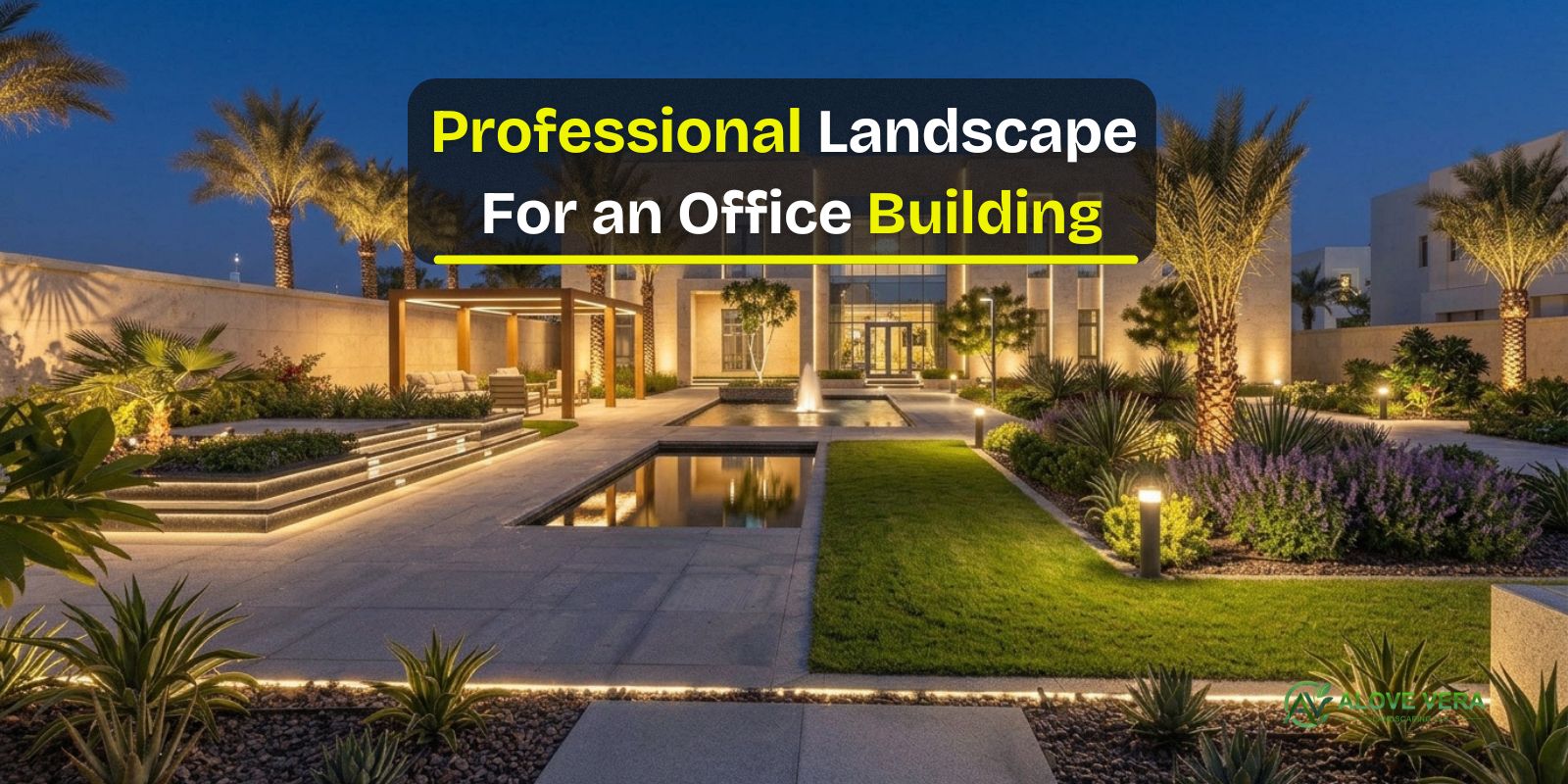
How to Design a Professional Landscape for an Office Building
A professional landscape for an office building directly reflects corporate credibility, operational efficiency, and environmental responsibility in the UAE’s competitive commercial sector. The exterior grounds surrounding an office tower or commercial complex create the initial physical impression for visiting executives, potential tenants, and daily employees. Thoughtfully planned greenery, durable stone hardscaping, and shaded pedestrian walkways convert bare concrete perimeters into welcoming, functional corporate environments that boost daily workplace morale and long-term property value.
Executing a professional landscape for an office building requires balancing visual sophistication with practical desert horticulture and low-maintenance civil engineering.
1. Core Architectural and Functional Layout Principles
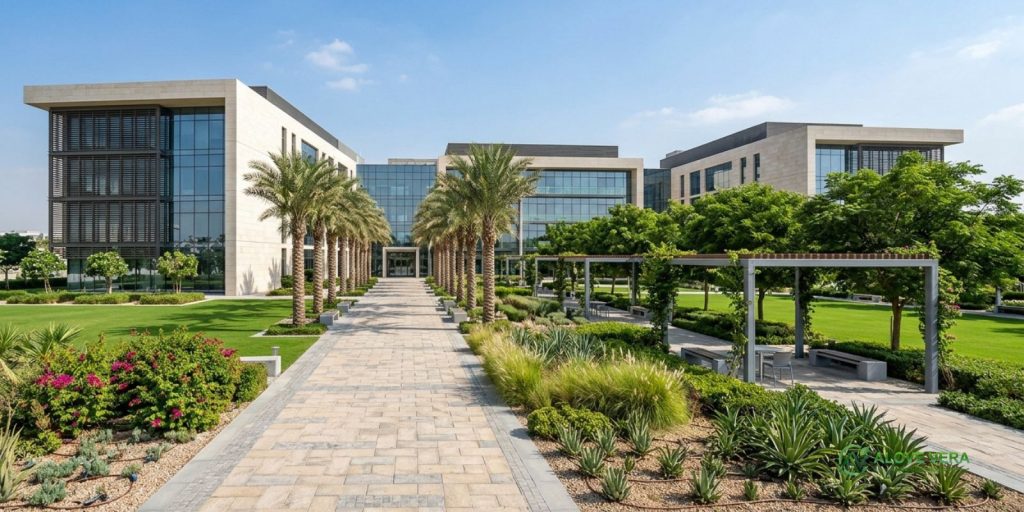
Planning outdoor grounds around modern commercial office complexes demands careful zoning to support daily employee movement, executive drop-offs, and microclimate comfort.
Entrance Framing and Sightline Management
The main approach sets the tone for the entire corporate property. Utilizing structured office building landscaping ensures that symmetrical tree alignments, architectural planter beds, and focal water features frame the lobby entrance clearly without obstructing corporate signage or security visibility.
Employee Break Courtyards and Shaded Walkways
Modern corporate campuses thrive when exterior spaces remain usable outside peak summer heat. Applying targeted office landscape design creates shaded courtyard seating, pergola-covered walkways, and tranquil green pockets where employees can recharge during breaks, improving overall workplace satisfaction.
2. UAE Municipal Standards and Water Conservation Mandates
Developing commercial exteriors in Dubai, Abu Dhabi, and across the Emirates requires strict compliance with national sustainability frameworks and municipal engineering guidelines.
The UAE Ministry of Energy and Infrastructure enforces strict water efficiency targets under its official National Energy and Water Demand Management Programme. Designing a professional landscape for an office building with automated subsurface drip irrigation, soil moisture sensors, and drought-adapted native species prevents wasteful water runoff while keeping commercial gardens vibrant year-round.
Additionally, commercial property developers must follow municipal civil regulations. The official Dubai Municipality Greenery and Plantation Manual establishes clear setback distances from underground utilities, foliage height limits near vehicle exits, and mandatory palm planting quotas. Aligning your professional landscape for an office building with these municipal directives protects facility owners from compliance delays and costly structural rework.
3. Climate-Resilient Plant Selection for Commercial Towers
Vegetation installed around glass-clad office buildings must endure extreme summer temperatures, wind tunnels between towers, and intense solar reflection from paved surfaces. Choosing hardy species for a professional landscape for an office building prevents seasonal plant die-off and reduces replacement budgets.
High-Canopy Palms and Architectural Shade Trees
Well-positioned trees can provide useful shade across open plazas and parking perimeters. Strategic professional office landscaping incorporates Date Palms (Phoenix dactylifera), Royal Palms, and resilient desert shade trees like Delonix regia or Prosopis cineraria (Ghaf), offering broad shade when species are selected for the site’s maintenance and cleanliness requirements on polished stone walkways. Integrating clean-growing trees into a professional landscape for an office building keeps entrance plazas spotless with minimal daily sweeping.
Low-Maintenance Shrubs, Succulents, and Gravel Mulching
Replacing water-intensive turf grass with structured xeriscape beds dramatically lowers facility operating expenses. Modern commercial office landscaping combines sculpted evergreen hedges, Agave varieties, flowering Bougainvillea, and decorative desert gravel mulching to lock in soil moisture and prevent windblown dust across pedestrian paths.
4. Phase-by-Phase Execution Plan for Facility Directors
Property managers and commercial developers should follow a systematic workflow to implement exterior upgrades without disrupting active office operations:
- Site Audit & Circulation Mapping: Evaluate sun-path shadows, wind corridors, underground utility networks, and pedestrian entry routes before finalizing CAD layouts.
- Civil Hardscaping & Drainage Grading: Install high-load granite pavers, concrete kerbs, root containment barriers, and proper surface drainage slopes to prevent water pooling.
- Subsurface Smart Irrigation Installation: Deploy pressure-compensated drip lines connected to centralized, weather-responsive controllers for precise root-zone hydration.
- Specimen Planting & Soil Conditioning: Enrich planting pits with organic desert soil amendments before positioning mature palms, shade trees, and layered shrub borders.
- Off-Peak Maintenance Scheduling: Establish quiet, early-morning or weekend groundskeeping schedules for frond pruning, fertigation, and system inspections.
5. Financial ROI: Asset Appreciation and Tenant Retention
Investing in high-caliber exterior grounds delivers measurable financial advantages across a commercial building’s lifecycle.
- Higher Occupancy and Lease Rates: A well-executed office building landscape design differentiates commercial towers in crowded business districts, improving the property’s presentation and potentially strengthening its appeal to prospective commercial tenants.
- Reduced Energy and Cooling Costs: Strategic tree placement and green walls shade ground-floor glass facades; well-positioned planting and shade elements can help reduce direct solar exposure around selected building areas.
- Lower Hardscape Repair Expenses: Implementing structured corporate office landscaping with proper root barriers and drip irrigation prevents paver heaving, asphalt cracking, and water-damage repairs.
6. Cost Factors for Office Building Landscaping
The cost of office building landscaping depends on the property size, existing site conditions, hardscape requirements, planting design, irrigation, drainage, lighting, shade structures and ongoing maintenance. Larger office complexes may also require phased work to maintain employee and visitor access during installation.
A detailed quotation should separate design, civil works, planting, irrigation, lighting and maintenance so property managers can understand the complete project scope.
| Cost Area | What It May Include |
| Site Preparation | Removal, grading and ground preparation |
| Hardscape | Paving, kerbs, planters and edging |
| Planting | Palms, trees, shrubs and groundcovers |
| Irrigation | Drip systems, controllers and related equipment |
| Drainage | Surface drainage and related works |
| Lighting | Pathway, tree and entrance lighting |
| Maintenance | Pruning, irrigation checks and plant replacement |
Smart Planning with AV Landscaping
Delivering an enduring commercial exterior requires partnering with an experienced civil hardscaping and horticultural engineering firm. AV Landscaping provides complete master planning, civil construction, and long-term maintenance programs tailored specifically for corporate towers, business parks, and commercial office developments across the UAE.
Our engineering team executes every professional landscape for an office building with full Bill of Quantities (BOQ) transparency, durable material specifications, and strict municipal compliance. When facility directors and asset managers require dependable exterior solutions, our core capabilities deliver:
- Custom 3D architectural modeling to optimize pedestrian walkways, drop-off plazas, and shaded courtyard zones.
- Heavy-duty civil paving, natural stone interlock installation, concrete kerb fitting, and root barrier engineering.
- Water-efficient subsurface drip irrigation networks built to withstand extreme thermal stress and high commercial footfall.
- Structured annual maintenance contracts designed to keep palm canopies trimmed, planters immaculate, and irrigation operating at peak efficiency.
We construct resilient, impressive corporate exteriors that safeguard your civil infrastructure and elevate property value year after year.
Ready to upgrade your commercial property’s exterior grounds? Visit avlandscaping.ae to schedule a site consultation with our commercial landscape engineering team today.
FAQs
1. What makes a Professional Landscape for an Office Building successful in the UAE?
A professional landscape for an office building succeeds in the UAE by combining heat-adapted native trees, durable stone hardscaping, shaded pedestrian walkways, and automated subsurface drip irrigation that conserves water while maintaining year-round visual appeal.
2. Which plants work best for a Professional Landscape for an Office Building?
Ideal plants for a professional landscape for an office building include Date Palms, Ghaf trees, Bougainvillea, Agave, and hardy evergreen shrubs that tolerate intense sunlight, wind, and reflected heat from glass facades.
3. How does smart irrigation improve a Professional Landscape for an Office Building?
Integrating automated subsurface drip systems into a professional landscape for an office building eliminates surface water puddles on walkways, reduces evaporation by up to 60%, and ensures compliance with UAE municipal water conservation regulations.