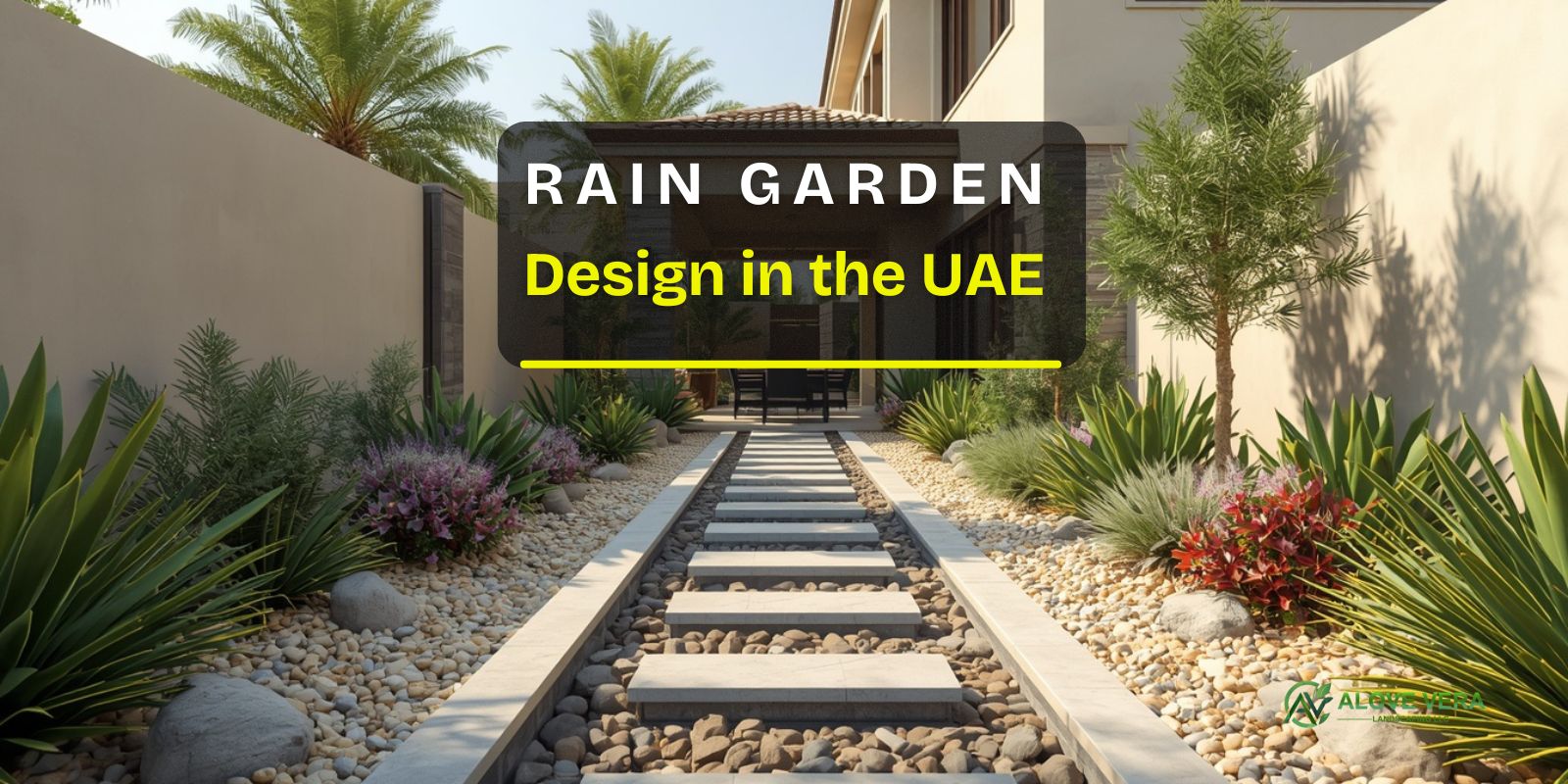
Rain Garden Design in the UAE: Turning Stormwater into a Landscape Asset
Most people in Dubai and Abu Dhabi think of water in the garden as something that only comes from irrigation lines or pools. But when it does rain, it can arrive fast—pooling on tiles, flooding low spots and running straight into drains. A well‑planned Rain Garden Design turns those brief, intense showers into an opportunity: capturing, slowing and using stormwater instead of simply getting rid of it.
Why Rain Garden Design Matters in the UAE
It might sound strange to talk about rain gardens in a desert country, but there are good reasons:
- When it rains, it often rains hard. Flat, paved surfaces can’t absorb that water, causing puddles and erosion.
- Traditional drainage systems move water away quickly but don’t offer any benefit to plants or soil.
- Sustainable design in the UAE is increasingly focused on smarter water use and resilience, not just irrigation (see: https://u.ae for national direction).
A professional Rain Garden Design handles water intelligently:
- Collecting runoff from roofs, terraces and driveways
- Directing it into designed low areas planted with species that can handle occasional soaking
- Allowing it to soak into the ground gradually, instead of overwhelming drains or flooding your neighbour’s garden
The result: less standing water, healthier soils, and garden areas that come to life after each rain instead of being damaged by it.
How Rain Garden Design Works
In simple terms, a rain garden is a shallow, planted basin designed to capture and filter stormwater. In UAE villas, Rain Garden Design usually works like this:
- Capture
Roof gutters, channel drains and surface slopes collect water from hardscape and roofs. - Conveyance
Subtle channels, swales or underground pipes move water towards one or more rain garden basins. - Infiltration
The basins are filled with engineered soil that allows water to soak in at a controlled rate, feeding plant roots and reducing surface water quickly. - Overflow management
In very heavy storms, overflow outlets ensure that excess water is directed safely into existing drainage without causing damage.
In the UAE context, Rain Garden Design isn’t about creating permanent ponds. Most of the time, rain gardens are dry, serving as attractive planting beds or “dry wadis” that hold visible water only briefly after a storm.
Site Analysis: The Foundation of Good Rain Garden Design
Any serious Rain Garden Design begins with understanding how water currently behaves on your property.
AV Landscaping typically:
- Surveys existing levels to find natural high and low points
- Observes or models how water will move across driveways, terraces and garden areas
- Identifies where water can safely be allowed to soak in—and where it must be kept away (foundations, basements, pools)
From there, we decide:
- How many rain garden areas are needed
- How deep and wide each basin should be
- What soil mix and under‑drainage (if any) is required for your specific site
This ensures that rain gardens improve how your villa handles water rather than creating new problem areas.
Integrating Rain Gardens into the Landscape Layout
Rain gardens should look intentional, not like empty pits waiting for water. AV Landscaping weaves Rain Garden Design into the overall plan so they double as visual features.
Common placements include:
- Along the edges of patios and decks – appearing as ornamental beds or “dry riverbeds” that collect sheet runoff from paved areas.
- Between driveway and lawn – capturing water from impervious surfaces before it runs off the property.
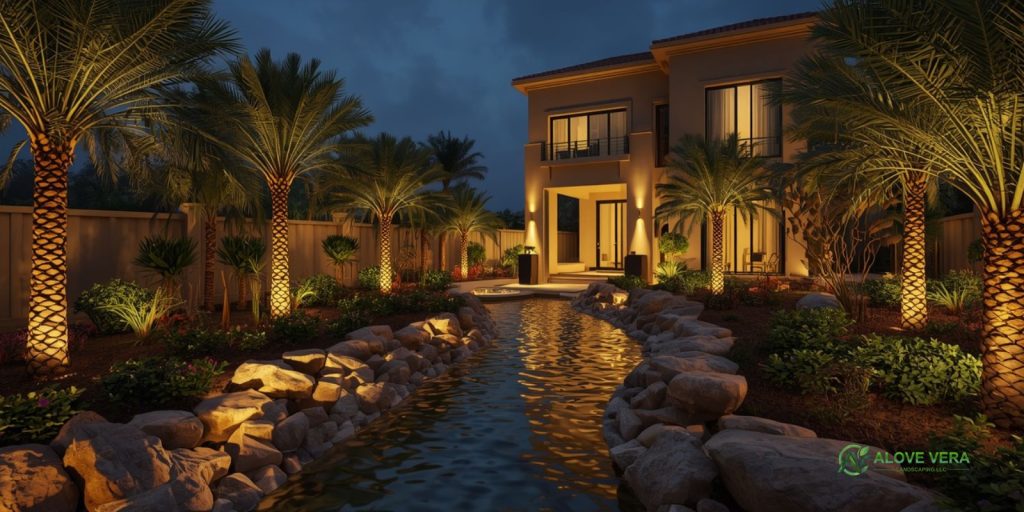
- At the lowest point of the garden – turned into a sculpted wadi‑style feature with stone, grasses and hardy shrubs.
Hardscape choices that support this approach:
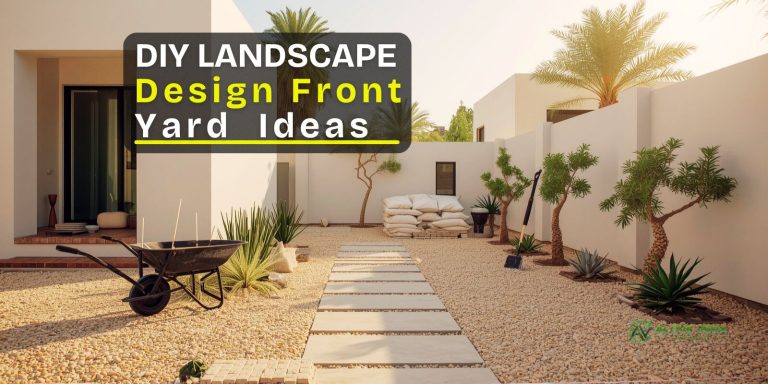
- Permeable pavers and gravel bands near rain gardens to increase infiltration
- Stone‑lined channels that echo natural wadis and become striking design lines when dry
This way, Rain Garden Design adds form and texture to the garden, not just hidden function.
Planting for Rain Garden Design in the UAE
The plants used in rain gardens must tolerate two conditions: long, hot dry periods and short, occasional wet periods. That’s why climate‑adapted and native species are critical in UAE‑appropriate Rain Garden Design.
AV Landscaping often selects:
- Deep‑rooted shade trees and shrubs (e.g., Ghaf in larger spaces, selected native or adapted shrubs) that benefit from occasional deep watering.
- Ornamental grasses and sedge‑like plants that handle both dry and wet soil, adding movement and structure.
- Salt‑tolerant species in coastal areas, which can cope with slightly saline runoff or soil.
- Groundcovers and low perennials that stabilise soil, reduce erosion and make basins look attractive when dry.
Planting is layered so that each level—canopy, mid‑storey and groundcovers—plays a role in intercepting, using and filtering water.
This aligns with UAE sustainability goals and MOCCAE recommendations on using native and drought‑tolerant species where possible:
https://www.moccae.gov.ae
Engineering and Maintenance Considerations
Behind the natural look, there’s precise engineering. AV Landscaping designs Rain Garden Design systems with:
- Engineered soil mixes – a blend of sand, organic matter and sometimes fine gravel to balance infiltration with nutrient holding.
- Geotextiles and base layers where needed to prevent fine particles from clogging drainage.
- Clear inlet and outlet points so water enters and exits basins predictably, reducing erosion risk.
- Accessible inspection points for any subsurface components.
Maintenance for a well‑designed rain garden is typically straightforward:
- Occasional removal of accumulated debris near inlets
- Seasonal pruning and refresh of mulch, if used
- Periodic checks after unusual storms to ensure everything drains as expected
When Rain Garden Design is done well, you get an intelligent drainage system that also looks like a natural part of your garden.
Why Work with AV Landscaping for Rain Garden Design?
Designing attractive, functional rain gardens in a desert climate requires an unusual mix of skills: landscape architecture, planting science and civil/MEP understanding. AV Landscaping brings all of these into a single process for Rain Garden Design:
- We start with topographic and climate analysis, not just plant selection.
- We integrate rain gardens with terraces, driveways, pools, lawns and planting as part of a single masterplan.
- We choose materials and plants proven in UAE conditions, so systems are resilient, not experimental.
- We supply 2D plans and 3D visuals so you can see how rain‑responsive features sit within your overall garden design.
If you’re ready for a villa garden that not only looks luxurious but also handles water intelligently and sustainably, you can explore AV Landscaping’s projects and request a tailored Rain Garden Design concept at:
With the right Rain Garden Design, the next time it rains, your outdoor space won’t just cope—it will come to life.
FAQs
What is a rain garden?
A rain garden is a shallow landscaped area designed to collect, filter and absorb rainwater runoff from roofs, driveways and paved surfaces.
Do rain gardens work in the UAE?
Yes. Although rainfall is limited, rain gardens help manage sudden heavy downpours, reduce water pooling and improve soil health.
What plants are suitable for rain gardens in the UAE?
Native and drought-tolerant plants, ornamental grasses, Ghaf trees and selected shrubs that can tolerate both dry and wet conditions are commonly used.