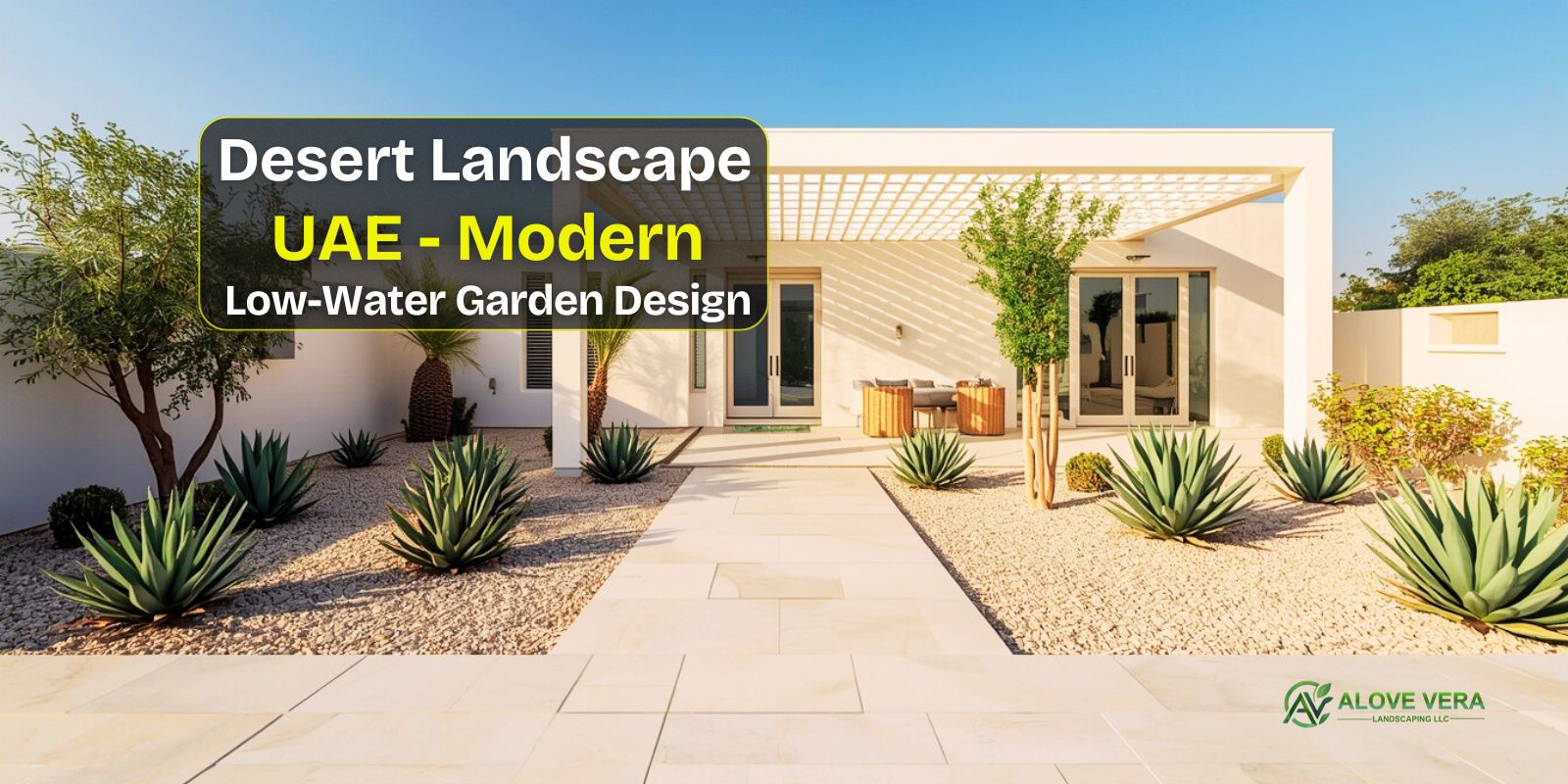
Desert Landscape UAE — Modern Low-Water Garden Design
In Dubai, a desert landscape is more than sand, stone, and a few cacti. It is a complete outdoor system that stays cool at noon, drains fast after wash‑downs, and looks composed with very little care. When a desert landscape is planned with filtered shade, slip‑safe surfaces, smart irrigation, and drought‑tolerant plants, your garden works on day one and year five.
Why a Desert Landscape Fits the UAE
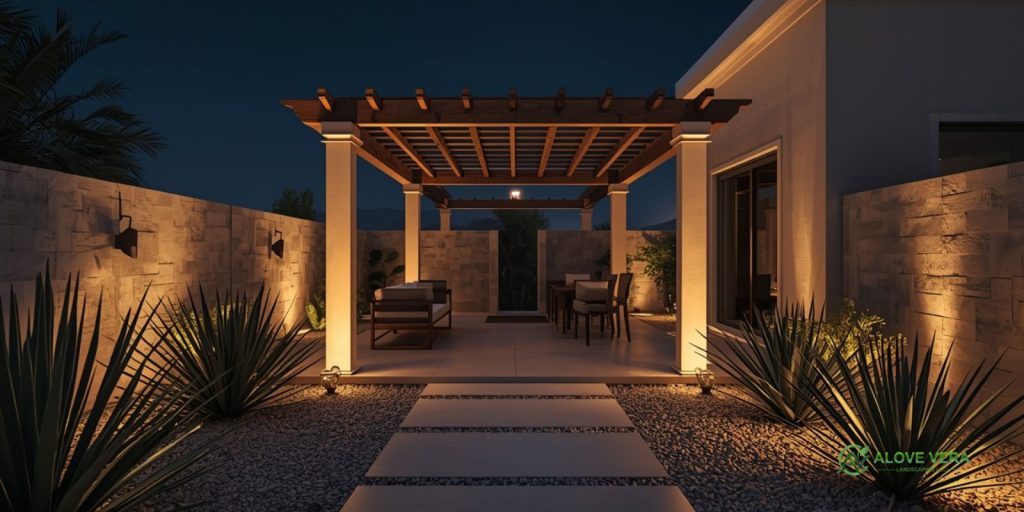
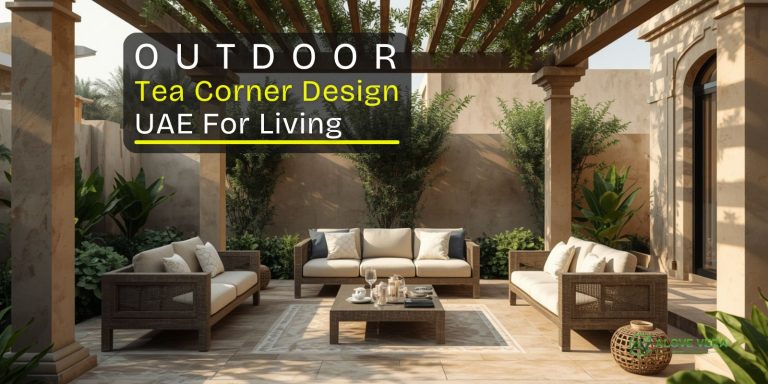
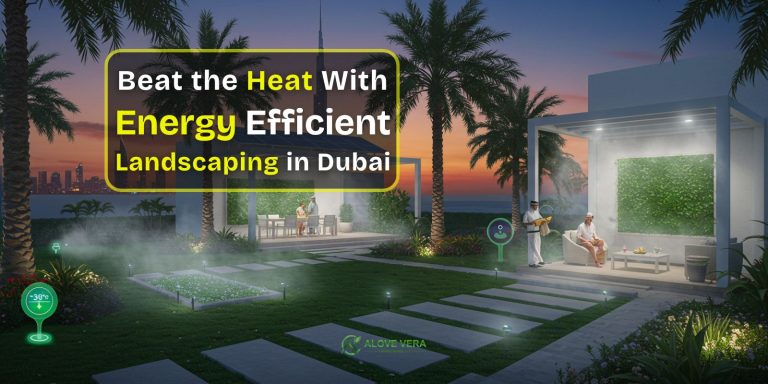
Heat, glare, and saline water quickly expose weak details. A well‑built desert landscape solves those stresses with filtered shade on the hot façade, non‑slip porcelain or interlock underfoot (R11/R12), and 1–2% drainage falls that move water away from door thresholds. Grouping plants by water need (hydro‑zoning) and using drip, not spray, keeps crowns healthy and walls clean—exactly what sustainable landscaping UAE aims to achieve.
Structure first: Shade, Surfaces, Drainage
Start with comfort and protection; then add the soft layer. A desert landscape that feels premium is usually the simplest on paper.
- Pergola or tensile sail on the afternoon façade; a light RAL finish reduces heat soak.
- Porcelain (R11/R12) for patios and steps, interlock pavers for drive/bay turns; a slim gravel band (30–40 cm) frames beds and hides drip lines.
- Linear drains at low doors; 1–2% falls away from façades; sills protected with a neat drip edge.
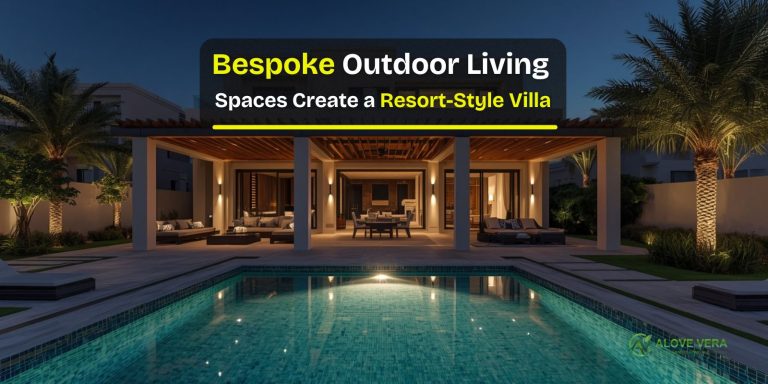
- Low‑glare path markers (2700–3000K) and gentle wall grazing; RCD‑protected circuits and labeled junctions for easy service.
These moves make a desert landscape cool underfoot, composable at night, and quick to clean.
Planting a Desert Landscape that Lasts
The soft layer should be tough, tidy, and low‑water. Think structure plants that hold shape, color plants with minimal litter, and sculptural accents. This is the heart of desert landscaping UAE.
- Structure (hedges & anchors): dwarf Carissa, Pittosporum, and (on large plots) native ghaf for high shade.
- Color with restraint: Tecoma stans (long bloom), Plumbago (soft blue), compact bougainvillea set away from paths.
- Accents: Agave attenuata (soft form near walks), Aloe arborescens/striata, Senecio serpens (blue chalksticks).
- Ground layer: Dymondia or Aptenia to close soil with little water; gravel mulch where you want zero litter.
A desert landscape succeeds when species are few and repeated well—clean masses read cooler and cut pruning. For water‑wise/native plants in the UAE, see MOCCAE guidance: https://www.moccae.gov.ae
Soil, Water, and Salinity (desert landscape essentials)
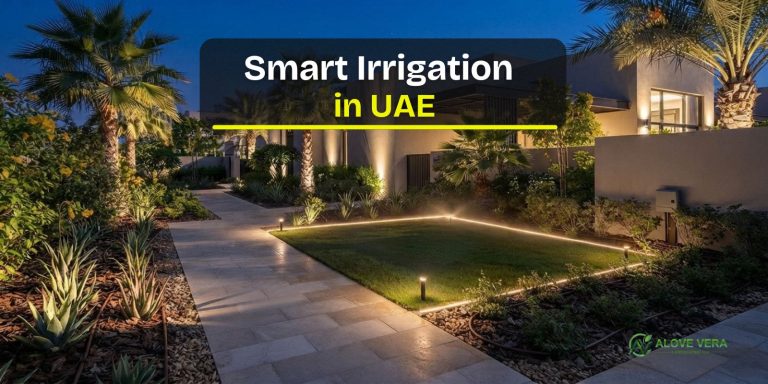
Desert garden design in Dubai hinges on rapid drainage and controlled salinity. Beds need sandy loam plus coarse sand and a touch of compost for oxygen and structure (avoid fine mixes that hold water against roots). Use pressure‑compensated drip with isolation valves; run seasonal schedules on a smart controller; and flush saline beds during cooler months. With these basics, a desert landscape drinks less and stays healthier. For setbacks and stormwater, align with Dubai Municipality notes: https://www.dm.gov.ae
Texture, Color, and Materials that Feel Natural
A visually calm desert landscape balances stone, gravel, and foliage without glare. Light, matte finishes on porcelain reduce heat; UV‑stable pigments on interlock keep bays neat; steel or stone edge restraint stops creep and keeps lines sharp. Repeat a limited palette—one hero surface, one border—then layer texture with river rock pockets or a wall fountain accent. That’s xeriscaping UAE in practice: less water, less work, better results.
Short, high‑impact pairs
- Porcelain plank (running bond) + 30 cm gravel frame → longer‑looking patios
- Interlock drive (mixed‑module) + pencil‑line border → crisp forecourts
- River rock swales + blue chalksticks → subtle color and drainage in one line
- Pergola shade + under‑blind → bright winters, protected August noons
Each pair supports a durable desert landscape that also photographs beautifully.
Care, Compliance, and What to Avoid
A tidy, predictable routine beats big seasonal fixes. Weekly, blow or rinse dust; monthly, use a pH‑neutral wash on paving and top up polymeric sand on interlock joints; seasonally, light prune, flush saline beds, inspect caulks, and re‑aim lights to avoid glare. Do these, and your desert landscape will keep its “new build” feel.
Avoid these five pitfalls
- Polished indoor tiles outdoors → slippery, hot; choose exterior porcelain R11/R12.
- Low thresholds and no drains → water against doors; add linear drains and raise sills.
- Spray irrigation near façades → stained walls and burned crowns; use drip.
- Too many species → clutter; repeat short lists for low‑care massing.
- No edge restraint → gravel/paver creep; install steel/stone borders.
Fix them on paper; the site build runs clean, and your desert landscape ages well.
Why AV Landscaping’s Method Works
We start with sun/wind mapping and a threshold/ponding audit, then lock the sequence: shade, safe surfaces, drainage, drip, and a calm, drought‑tolerant palette. Drawings show base depths, falls, drain locations, edge restraint, valve maps, and lighting circuits. We compact to spec, flood‑test drains, pressure‑test drip, and night‑focus lighting before handover. That is how a desert landscape survives August yet stays welcoming at night.
Ready to shape a cooler, low‑water garden? Share photos, rough sizes, and how you use the space. We’ll propose a desert landscape plan—materials, patterns, drainage, hydro‑zones, and lighting—tailored to your villa or frontage. Explore projects or request a site visit at https://avlandscaping.ae.
FAQs
1️⃣ What is the best plant choice for a desert landscape in the UAE?
Drought-tolerant plants like agave, aloe, dwarf carissa, and native ghaf trees perform best in a desert landscape because they handle heat, saline water, and low irrigation.
2️⃣ How do you keep a desert landscape cool in summer?
Use filtered shade (pergola or sail), light matte porcelain (R11/R12), gravel frames, and drip irrigation. Proper drainage slopes (1–2%) also prevent heat buildup near façades.